Blog
sprinto angle right
ISO 27001
sprinto angle right
SOC 2 Change Management: Policy, Process & Best Practices

SOC 2 Change Management: Policy, Process & Best Practices

TL,DR:

SOC 2 change management establishes policies and procedures for service organizations to implement changes within their IT environment while mitigating risks and meeting audit requirements under Common Criteria 8.1
Organizations must authorize, design, develop, test, approve, and implement changes to data, software, or processes with full documentation including the reason for change, authorizing entity, and implementing employee
Common pitfalls include failing to document system upgrades, not logging production changes, missing approval workflows for configuration updates, and lacking evidence of authorized change requests during audit reviews

If your organization’s SOC 2 audit is around the corner, everyone in your team has surely worked hard to get that SOC 2 certificate. A ton of effort went into ensuring that the organization is demonstrating compliance for applicable Trust Service Criteria (TSC). 

In your SOC 2 journey, are you ready to demonstrate evidence for questions on Adherence to Common Criteria 8.1? Can you demonstrate how policies and updates are conducted on an org. Level to enable continuous data protection? This is where SOC 2 change management comes in.

This article dives into the details of SOC 2 change management, steps to implement it, TSC-wise details, best practices to follow, and, ends with a  few examples of SOC 2 change management.

What is SOC 2 Change management?

SOC 2 change management establishes policies, procedures, and best practices for service organizations to continuously implement changes within their IT environment. It helps to mitigate risks, meet auditing guidelines, and eliminate gaps while making changes.

This requires service organizations to authorize, design, develop, acquire, configure, document, test, approve, and implement changes to data, software, or processes to meet its objectives’. It is a routine process described in SOC 2 Common Criteria 8.1 for entities undergoing an audit. Auditors verify if the organizations meet the criteria.

In other words, SOC 2 change management is the documentation that details the policies and updates organizations implement to sustain a continuous security posture. Details on reason for change/upgrade, authorizing entity, employee that implemented the change, and more. These documents include details on simple tasks to complex changes.

Why is Change Management Important for SOC 2?

Change management policies help organizations demonstrate the effectiveness of their system, processes, and controls to handle tasks related to changes. These changes include using new tools or technologies, updating a process workflow, and database system updates within the IT infrastructure. 

The objective of change management in SOC 2 is to maintain transparency, accuracy, and accountability in internal control. 

Also, fill your details in the block to get a complete list of SOC 2 controls.

SOC 2 change management requirements under CC8.1

SOC 2 change management requirements come from Common Criteria 8.1, which expects organizations to authorize, design, develop, configure, document, test, approve, and implement changes to infrastructure, data, software, and procedures.

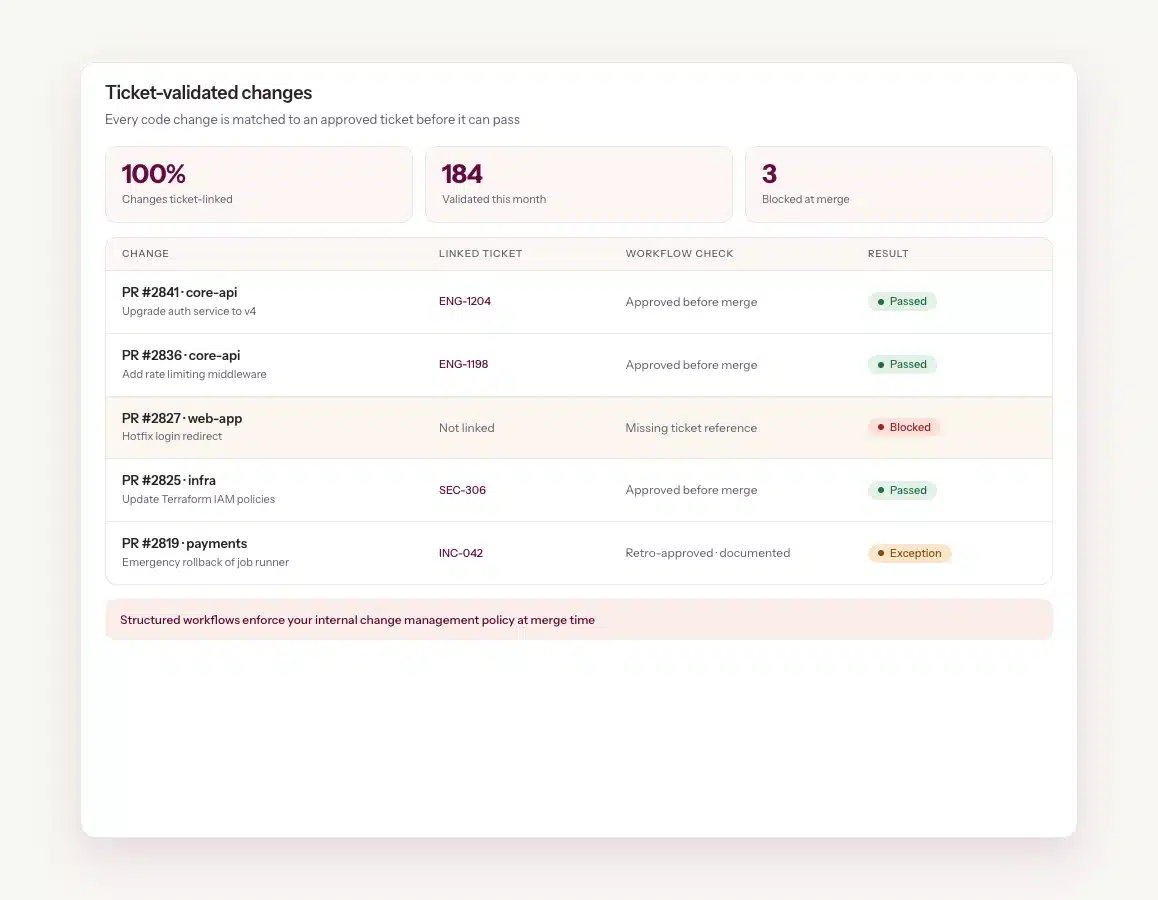
For an auditor, the main question is simple: can you prove that every significant change was reviewed, approved, tested, deployed, and documented before it affected production?

A SOC 2-ready change management process should include the following requirements:

RequirementsWhat it meansEvidence auditors may ask for
Change requestEvery change should start with a formal requestJira ticket, GitHub issue, service desk ticket, change request form
AuthorizationThe change should be approved by an authorized person before work beginsApproval record, ticket sign-off, manager approval
Impact assessmentThe team should assess how the change affects security, availability, confidentiality, privacy, or processing integrityRisk notes, impact analysis, affected systems list
Design and developmentChanges should be designed and developed in a controlled environmentPull requests, design notes, development records
TestingChanges should be tested before releaseTest logs, QA sign-off, automated test results, staging validation
Approval before deploymentProduction changes should receive final approval before releaseChange approval, release approval, CAB approval where applicable
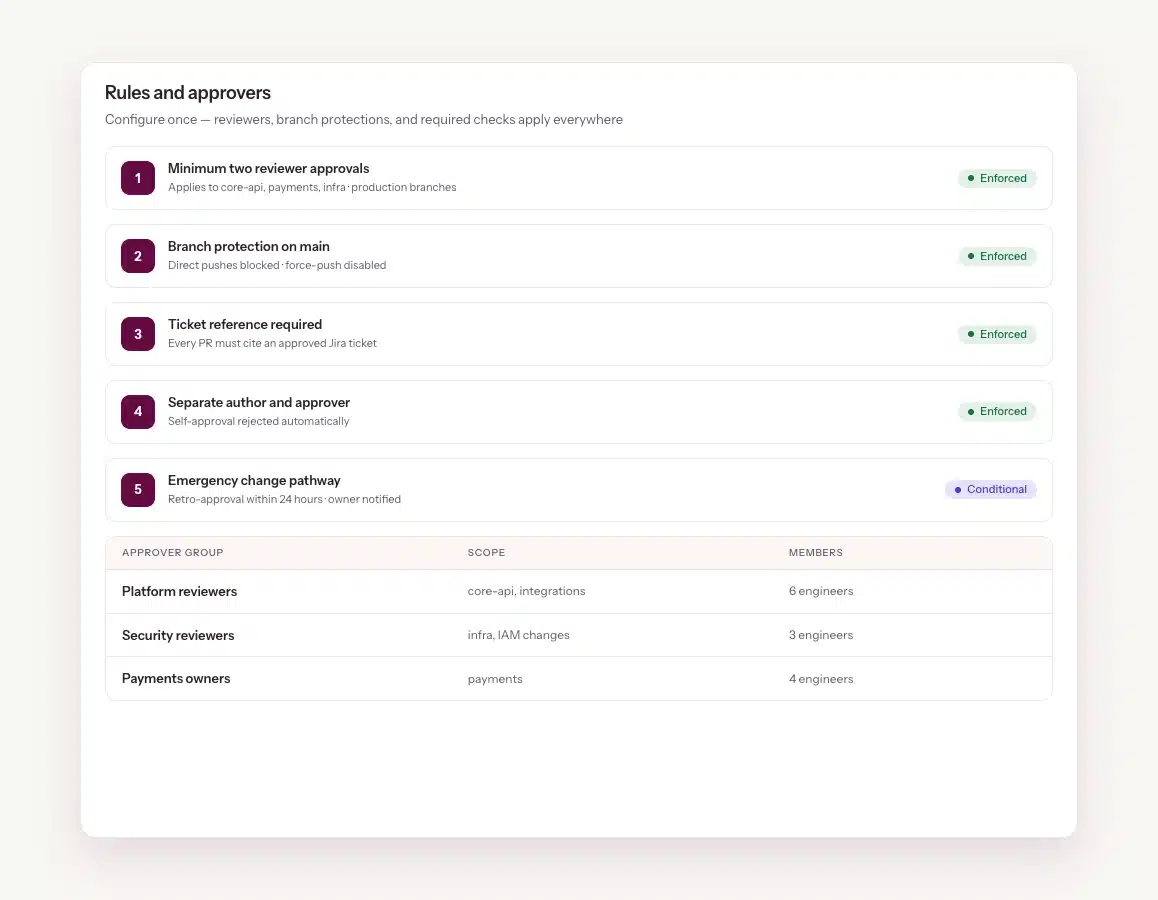
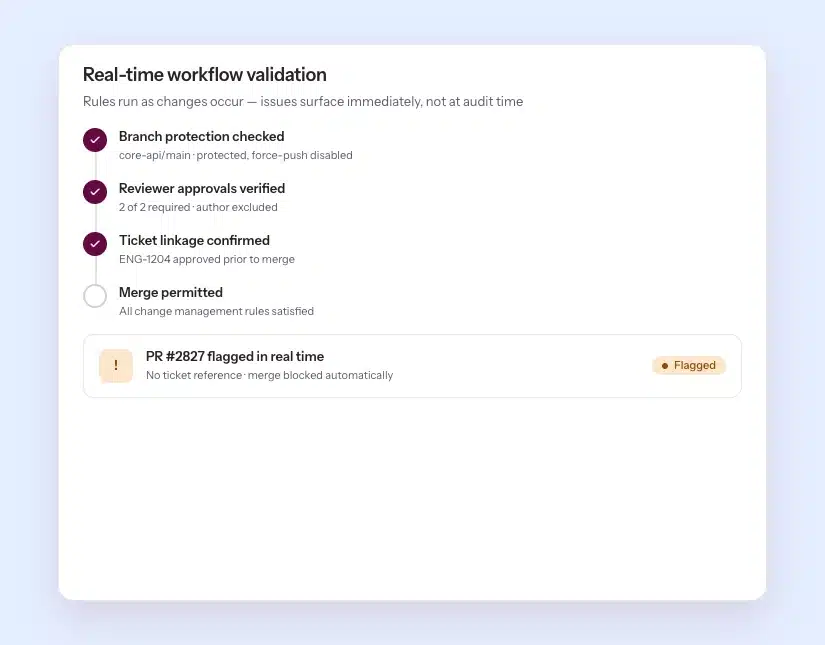
Segregation of dutiesOne person should not be able to request, approve, test, and deploy a sensitive change without reviewRole permissions, peer review records, branch protection rules
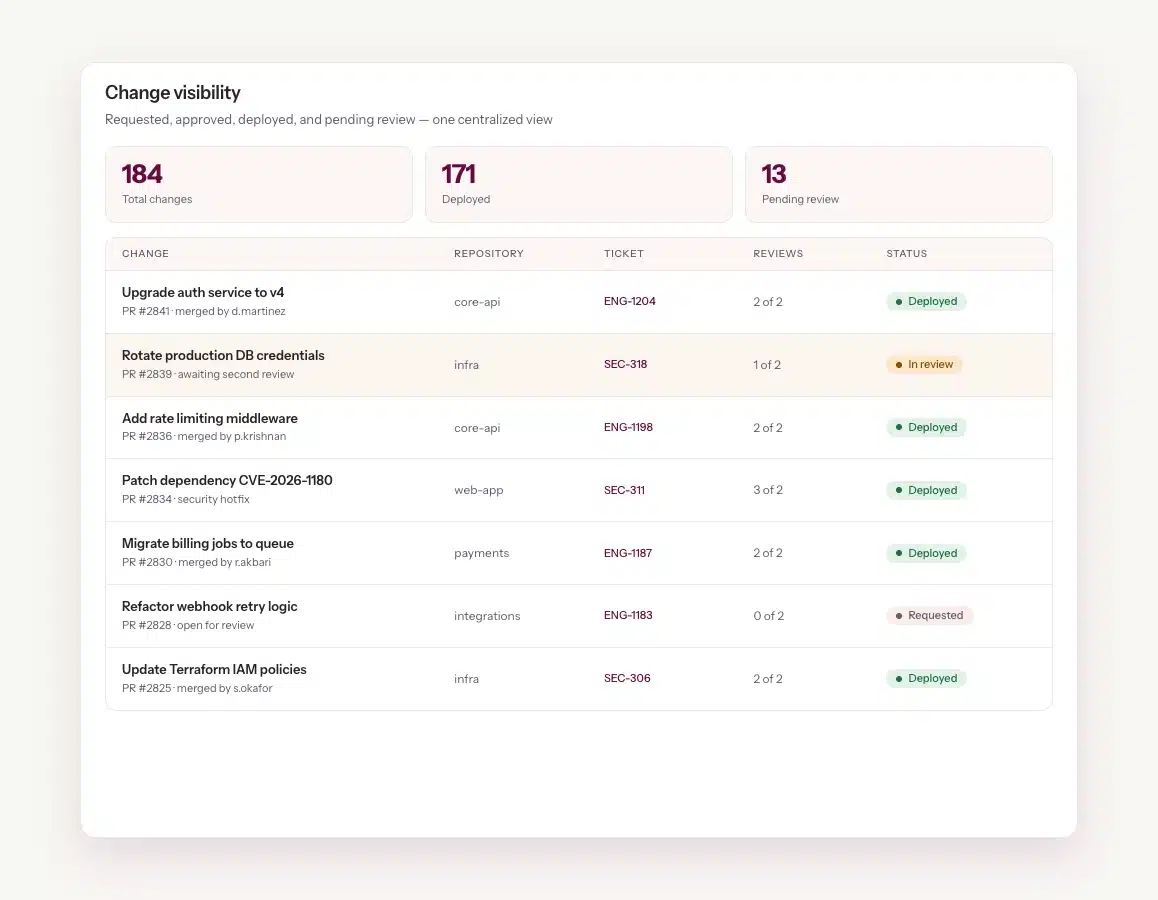
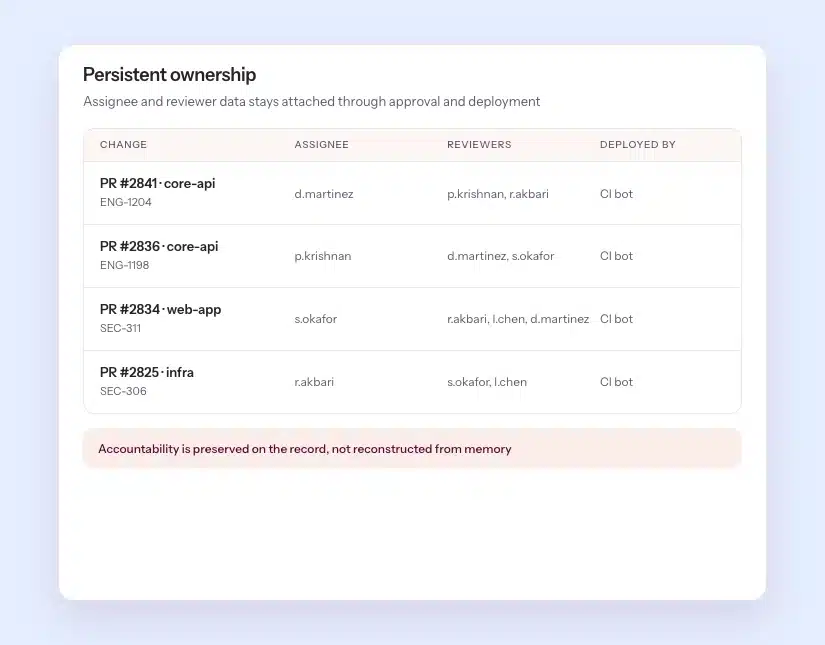
Deployment trackingThe organization should track what was deployed, when, and by whomDeployment logs, CI/CD logs, release notes
Emergency change processUrgent changes should still be reviewed, documented, and retrospectively approvedEmergency change ticket, post-implementation review

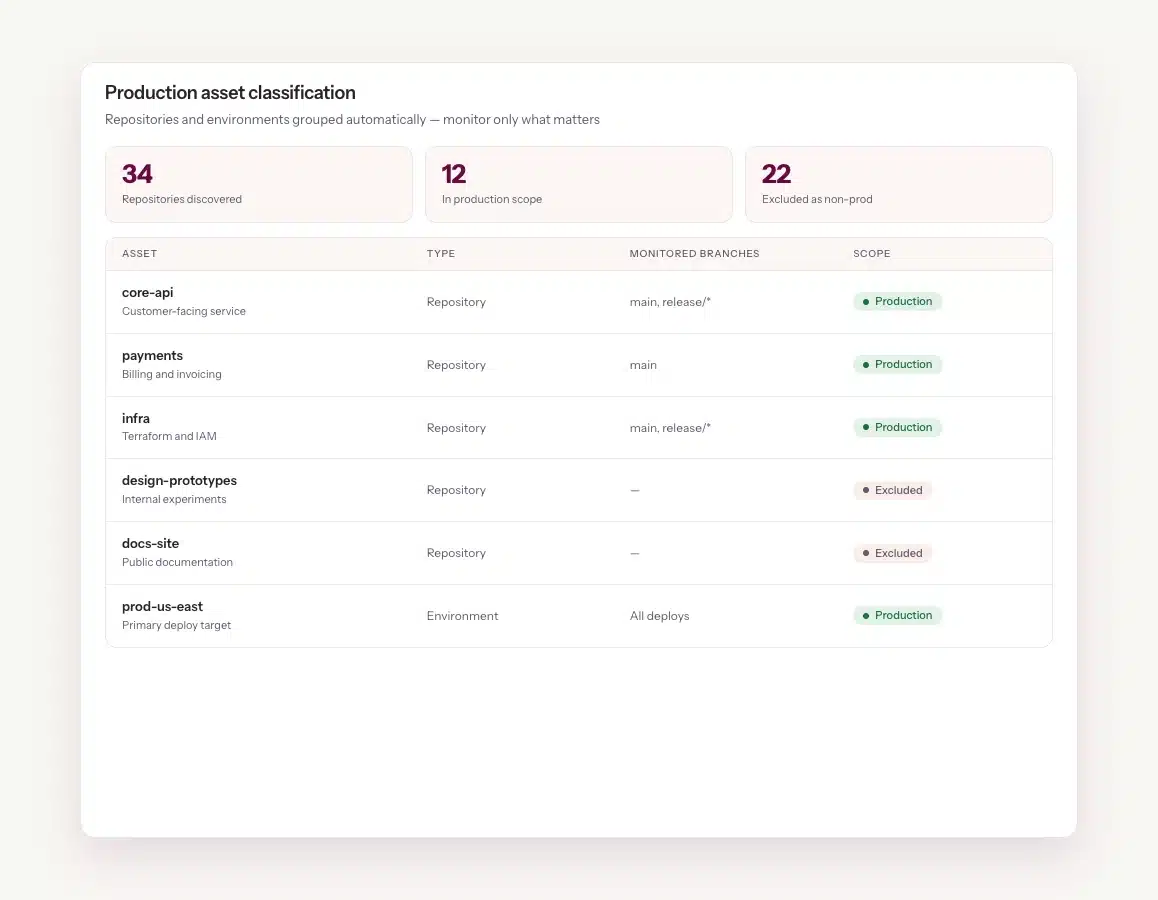
These requirements apply to changes across infrastructure, applications, databases, cloud configurations, production repositories, access rules, and business-critical procedures.

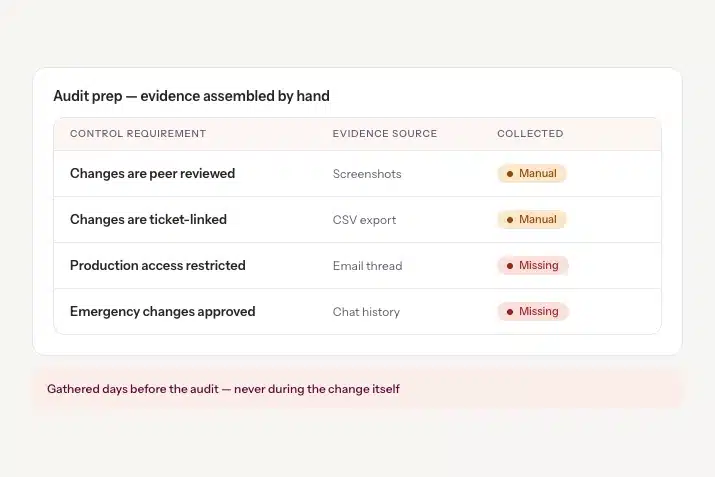
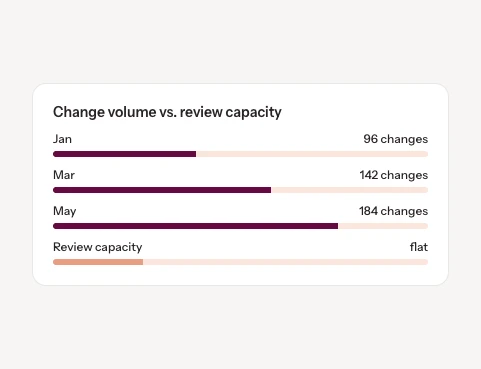
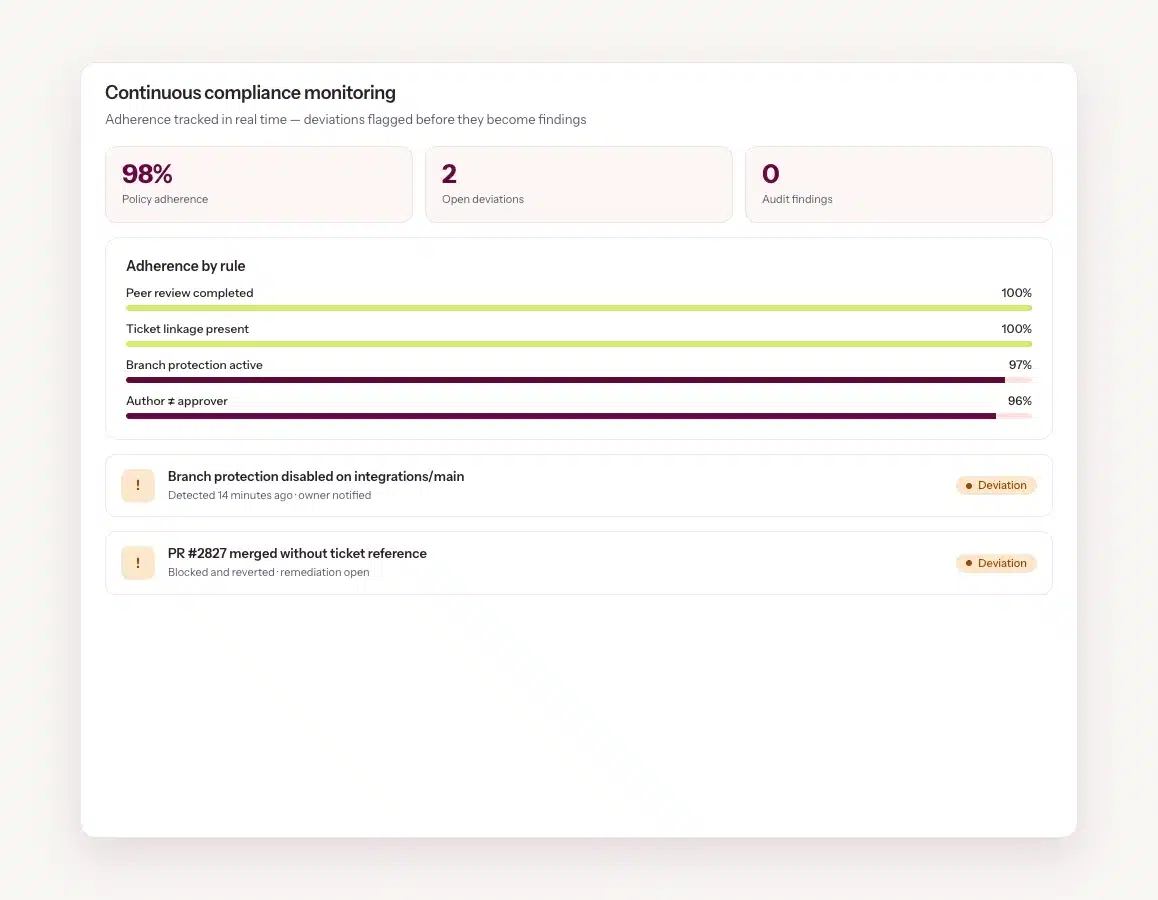
For SOC 2 Type 2, consistency matters. Auditors do not only check whether the policy exists. They sample changes across the observation period and verify whether the documented process was followed each time. A missing approval, absent test record, undocumented emergency fix, or unlogged production deployment can create an audit exception.

Additional considerations by Trust Service Criteria

Depending on the Trust Service Criteria in scope, change management should also address:

  • Availability: Test whether changes affect resilience, uptime, failover, backup, or recovery.
  • Confidentiality: Ensure confidential data remains protected during development, testing, deployment, and configuration changes.
  • Privacy: Limit the use of personal information during system changes and avoid unnecessary processing of personal data.
  • Security: Prevent unauthorized changes through access restrictions, peer reviews, approvals, monitoring, and production deployment controls.

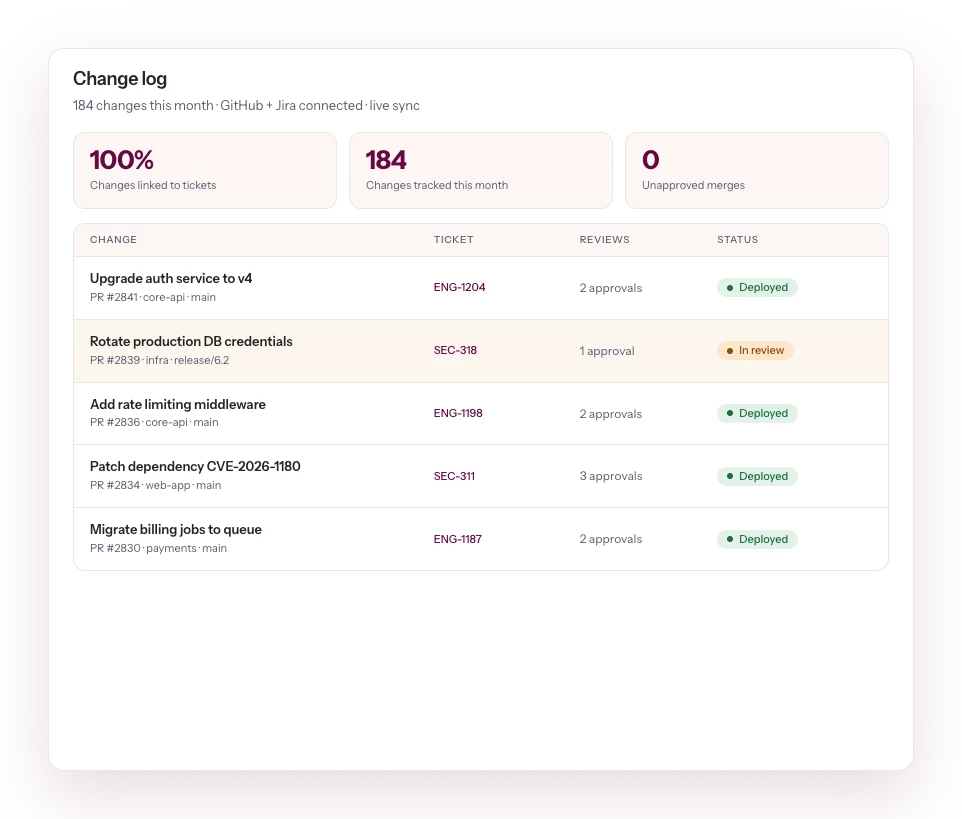
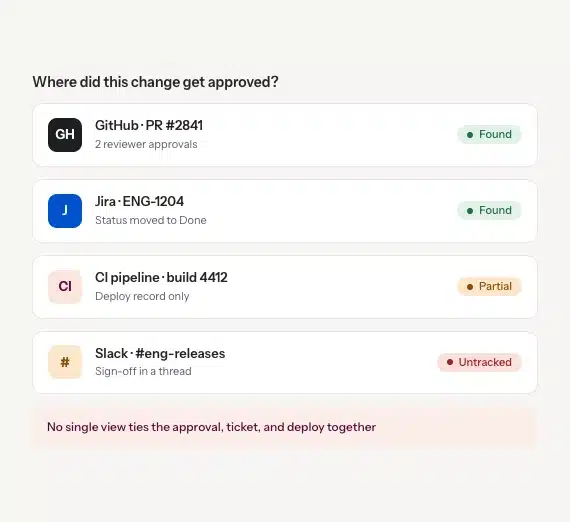
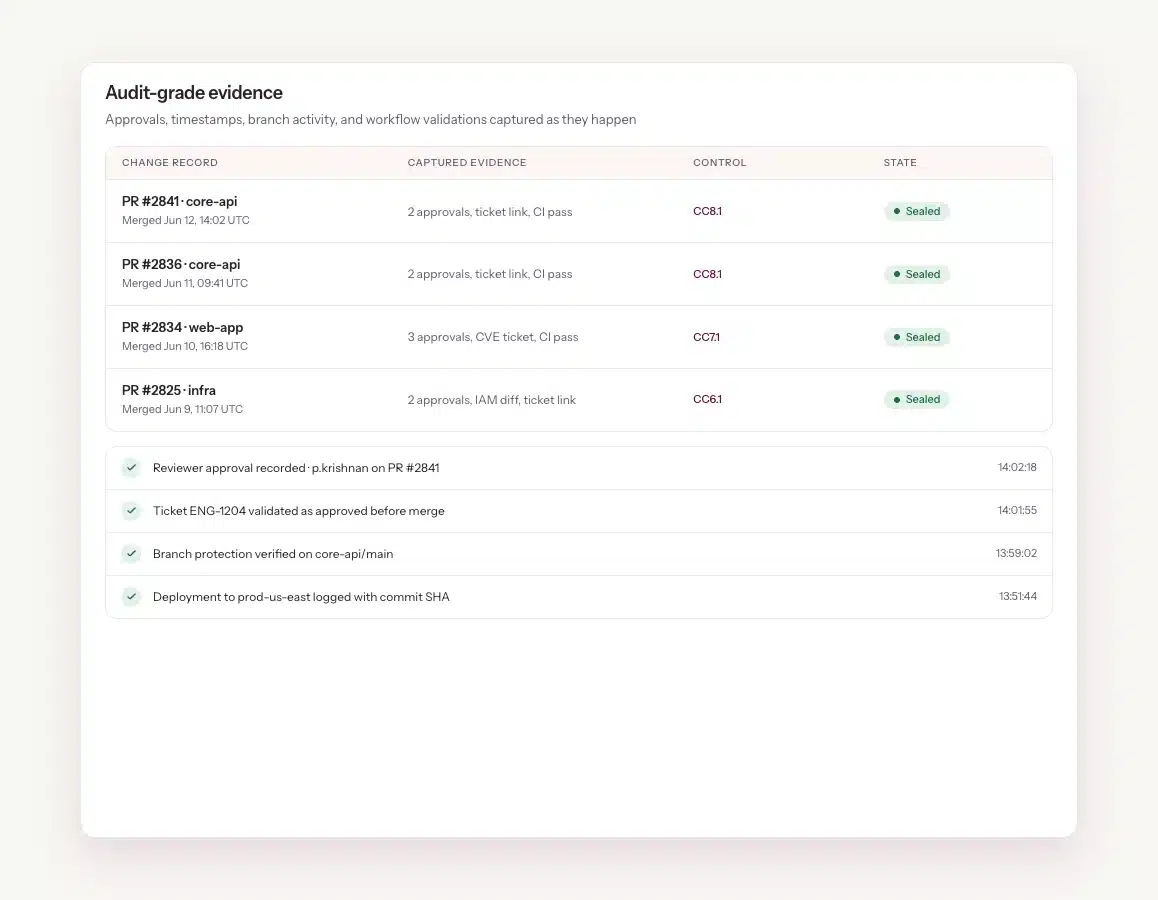
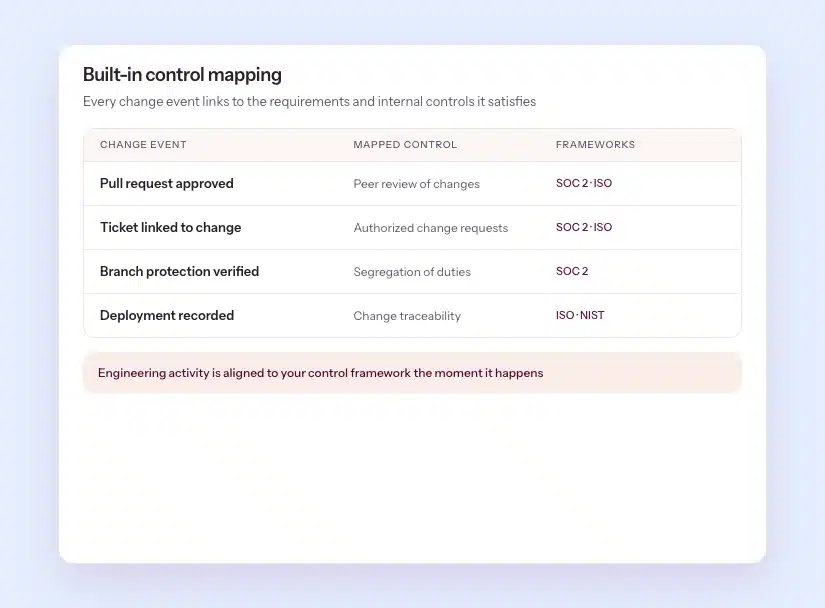
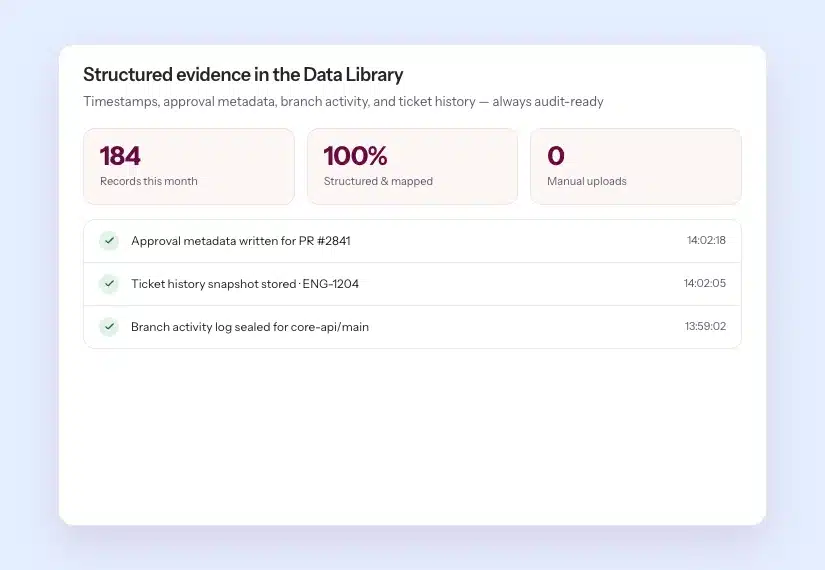
The strongest change management programs make audit evidence part of normal engineering work. Change tickets, pull requests, peer reviews, test logs, CI/CD records, and deployment logs should show the full history of the change without teams having to recreate it manually during the audit.

SOC 2 change management policy template

A SOC 2 change management policy documents how your organization requests, reviews, approves, tests, deploys, and tracks changes. It gives employees a consistent process to follow and gives auditors evidence that changes are controlled.

Your change management policy should include:

1. Purpose

Explain why the policy exists. For SOC 2, the purpose is to ensure that changes to systems, infrastructure, data, software, and procedures are authorized, tested, approved, documented, and implemented securely.

2. Scope

Define which changes are covered. This may include:

  • application changes
  • infrastructure changes
  • cloud configuration updates
  • database changes
  • production deployments
  • access control changes
  • security patches
  • third-party system changes
  • emergency fixes
  • process or workflow changes that affect the system

3. Roles and responsibilities

List who is responsible for requesting, reviewing, approving, testing, deploying, and monitoring changes. This should include engineering, IT, security, compliance, and business owners where applicable.

4. Change request process

Define how a change request should be raised. Each request should capture:

  • reason for the change
  • systems affected
  • business owner
  • risk or impact assessment
  • implementation plan
  • rollback plan, if applicable
  • testing requirements
  • approval status
  • planned deployment date

5. Testing and approval requirements

Specify that changes must be tested before production deployment. The policy should also define who can approve changes and when additional review is required.


For high-risk changes, require evidence such as peer review, QA validation, automated test results, security review, or Change Advisory Board approval.

6. Deployment controls

Document how approved changes are deployed. Include rules for production access, segregation of duties, branch protection, CI/CD controls, and deployment logging.

7. Emergency changes

Define how urgent changes are handled. Emergency changes may need expedited approval, but they should still be documented, tested where possible, and reviewed after implementation.

8. Evidence and record retention

Define which records must be retained for SOC 2 audits. These may include:

  • change tickets
  • approval records
  • pull requests
  • peer review records
  • test results
  • deployment logs
  • emergency change records
  • rollback records
  • post-implementation reviews

9. Policy review cadence

State how often the policy will be reviewed and updated. Annual review is common, but organizations should also update the policy after major system, process, or audit-scope changes.

Sample policy statement

Use this as a starting point:

All changes to production systems, infrastructure, data, software, and business-critical procedures must be requested, reviewed, approved, tested, documented, and implemented according to the organization’s change management process. Emergency changes must be documented and reviewed after implementation. Evidence of change approval, testing, deployment, and review must be retained for audit purposes.

Examples of SOC 2 Change Management 

Here are a few instances of how you can implement change management in business activities:

  • Introduce a process for change management and review it periodically (bi-annually or annually) 
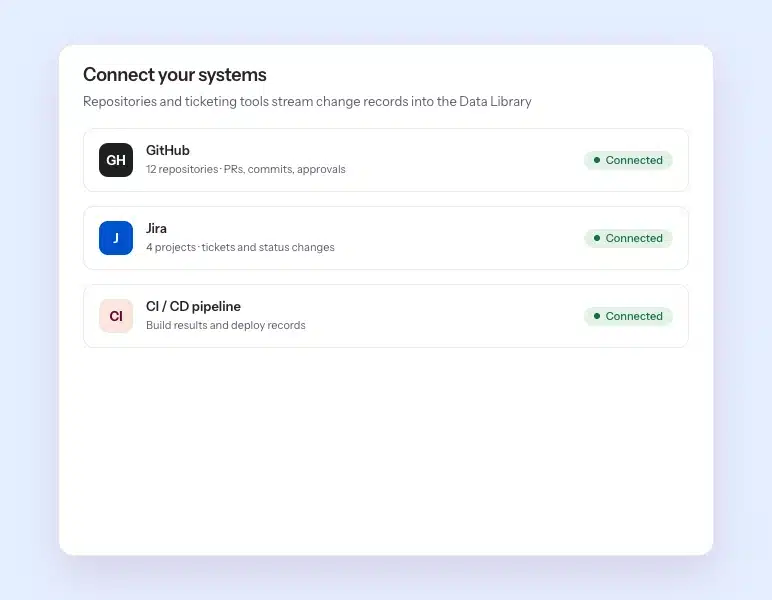
  • Log change management processes like a ticketing system, code repository for version control, and testing solutions
  • Maintain separate environments for development, production, testing, and staging. 
  • Access to deploy changes directly into production servers should be restricted
  • Perform post-implementation review to map the achieved efficiency vs desired efficiency

Signs of an Ineffective SOC 2 Change Management System

Here are few instances that paint a picture of an ineffective change management system:

  • A change is not authorized before deployment, but is still deployed
  • A change is not tracked throughout its life cycle and has gaps in documentation
  • The change does not meet system requirements listed by AICPA
  • A log that tracks changes made by users does not exist. In other words, information on the user(s) who made changes is not available. 
  • Planned changes are not deployed on time
    The configuration authorized for the change is not the same as the change implemented.
  • There is no process in place for emergency requests
  • Changes deployed in product are not logged

While these are a few, there are many other ways how change management systems become ineffective in demonstrating a strong security posture

Conclusion 

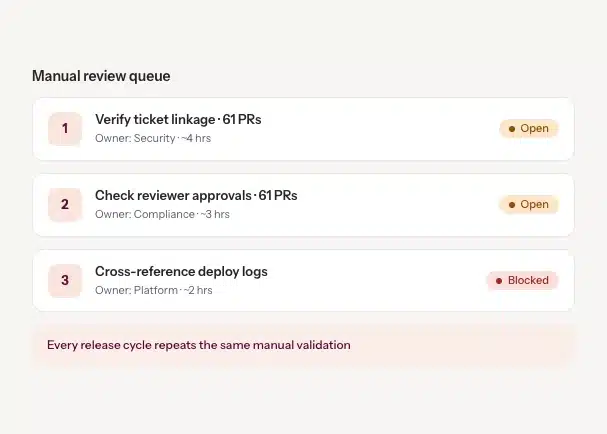
Managing, tracking, documenting every action across the ecosystem manually is not just time-consuming, but error-prone. Too many errors, and you risk getting a report that can set you back on your business goals for months, or worse, even years.

Sprinto automates all tasks you can possibly think of to manage your changes. It documents everything in an audit-friendly manner, helps you track changes from a centralized dashboard, triggers alerts to notify unauthorized changes, and more. Talk to our experts today to get a glimpse of how you can breeze through your SOC 2 journey. 

Frequently asked questions

SOC 2 change management requires organizations to document, authorize, test, approve, track, and securely implement system, software, and infrastructure changes to prevent unauthorized modifications and maintain security.

A SOC 2 change management policy defines how changes are requested, reviewed, tested, approved, documented, and deployed to ensure systems remain secure, compliant, and audit-ready.

Change management and version control support SOC 2 compliance by ensuring all code and system changes are tracked, reviewed, tested, approved, and traceable, helping auditors verify accountability and prevent unauthorized changes.

Anwita
Author

Anwita

Anwita is a cybersecurity enthusiast and veteran blogger all rolled into one. Her love for everything cybersecurity started her journey into the world compliance. With multiple certifications on cybersecurity under her belt, she aims to simplify complex security related topics for all audiences. She loves to read nonfiction, listen to progressive rock, and watches sitcoms on the weekends.
Tired of fluff GRC and cybersecurity content? Subscribe to our newsletter and get detailed
research & insights curated to help you earn a seat at the table.
single-blog-footer-img