Third-Party Risk: Vendor Category Landscape, 2026
Third-party ecosystems have evolved rapidly, but most TPRM programs still rely on uniform, vendor-centric assessments. This report introduces a category landscape view of third-party risk, helping organizations understand where governance maturity, structural impact, vendor variability, and runtime dependency intersect.
Download the report to learn:

How risk is distributed across key vendor categories

Which categories require continuous runtime monitoring

How to align TPRM efforts with real enterprise exposure
Get a copy of the report now!
How risk is distributed across key vendor categories
Which categories require continuous runtime monitoring
How to align TPRM efforts with real enterprise exposure
See How Risk Varies Across Vendor Categories
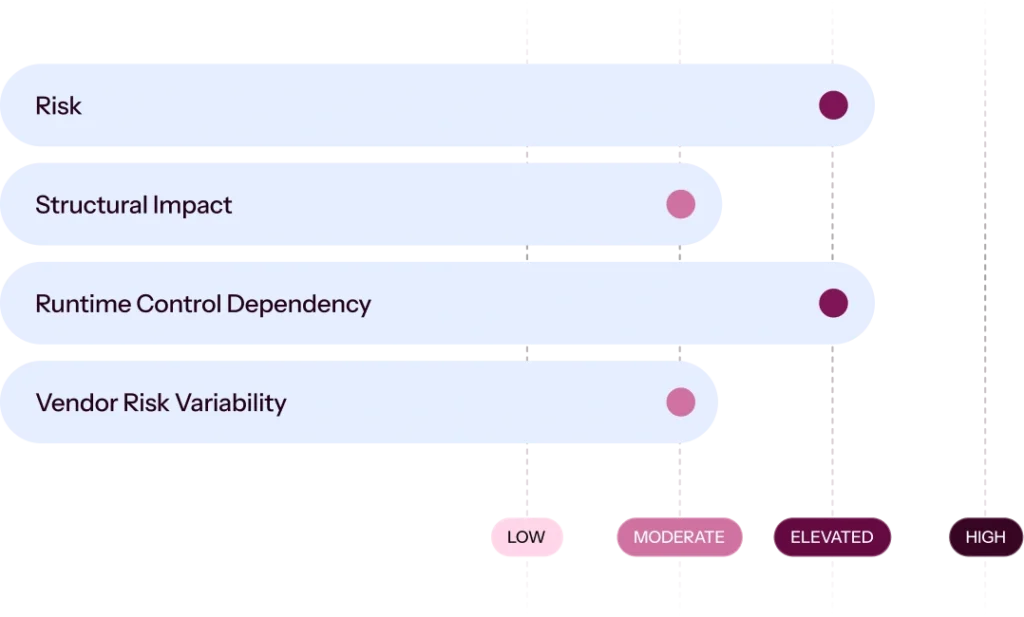
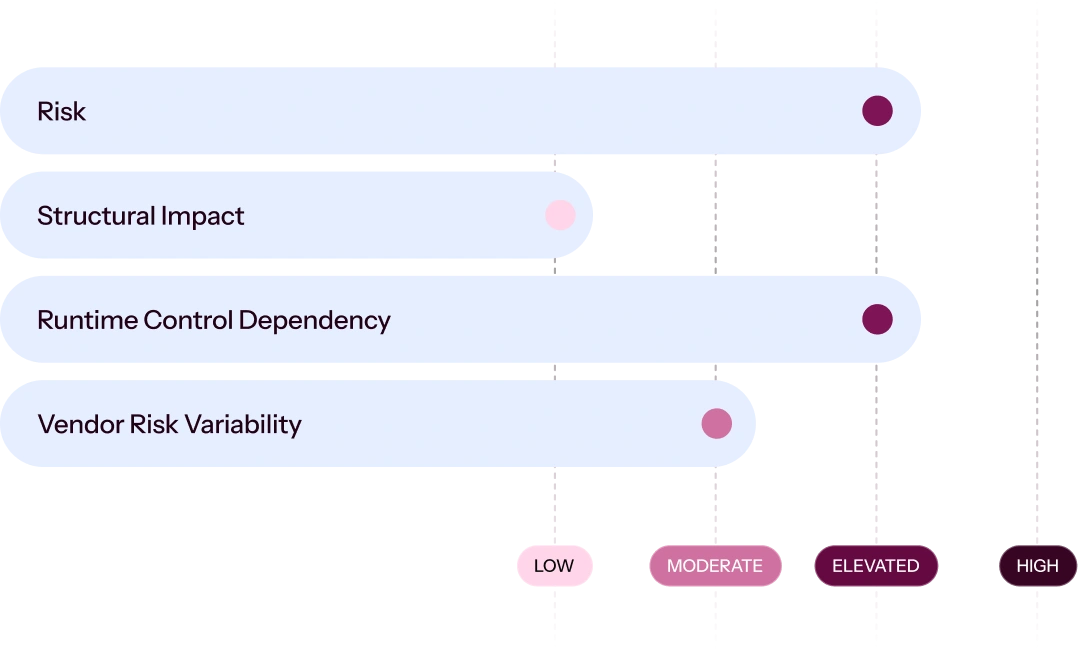
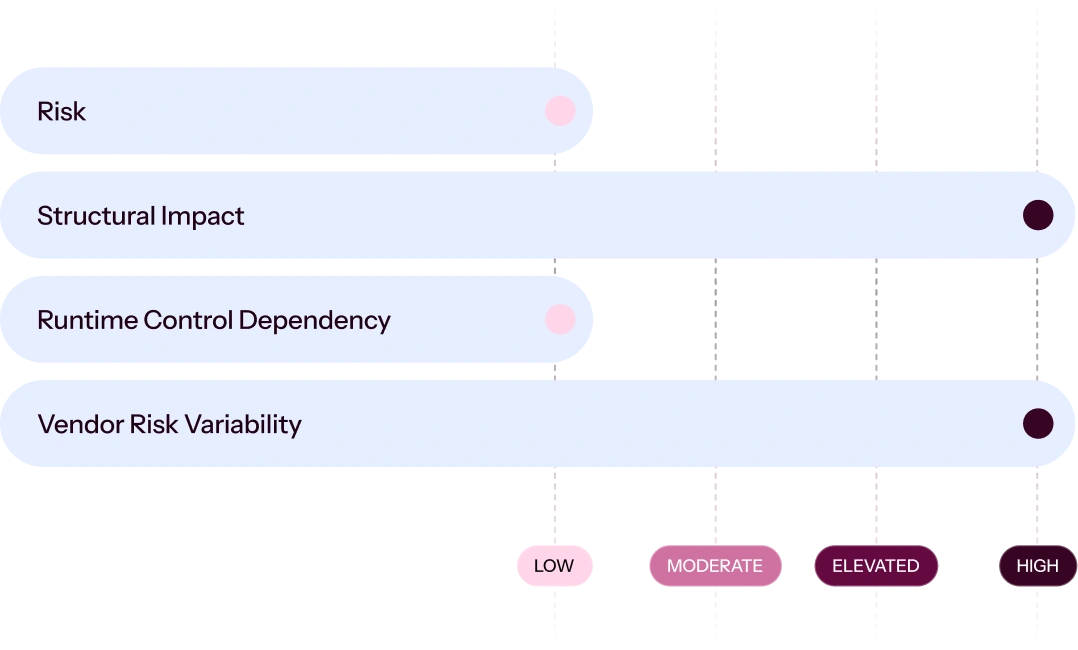
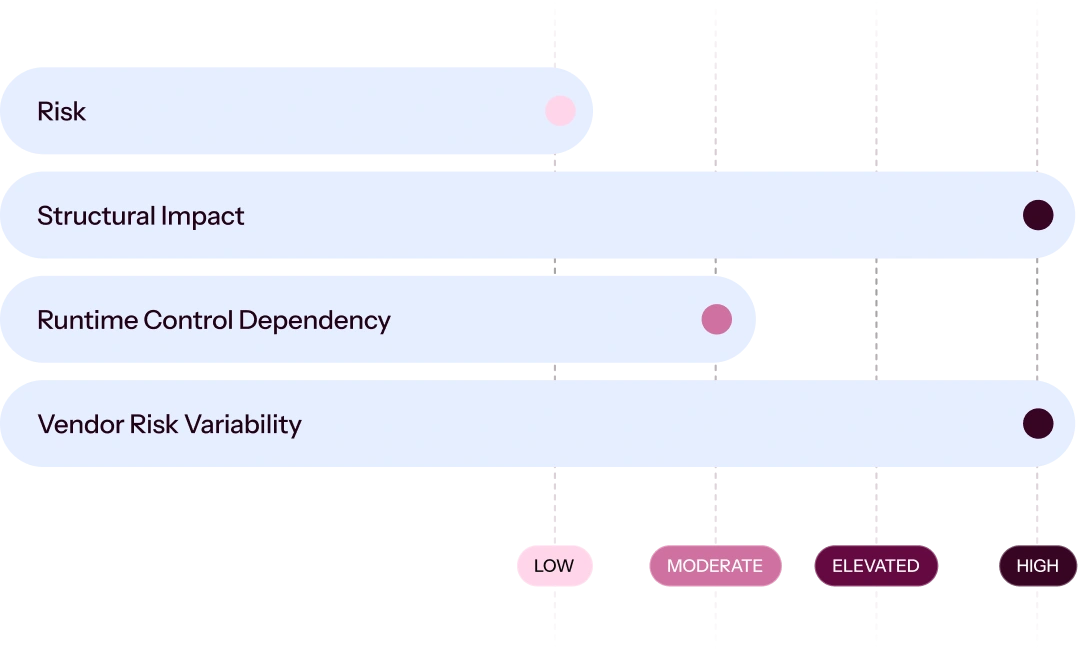
This report evaluates third-party risk across multiple vendor categories using four key dimensions: Risk Score (Median), Structural Impact, Vendor Risk Variability, and Runtime Control Dependency. Preview one category below to understand how risk is assessed.
1. AI Video, Media Generation & Editing
Category risk score: 40
2. AI Writing & Copy Generation
Category risk score: 40
3. Backup, Disaster Recovery & Data Protection
Category risk score: 31
4. Cloud Infrastructure, Hosting & Edge
Category risk score: 24
5. Cybersecurity, Endpoint & Network Security
Category risk score: 27
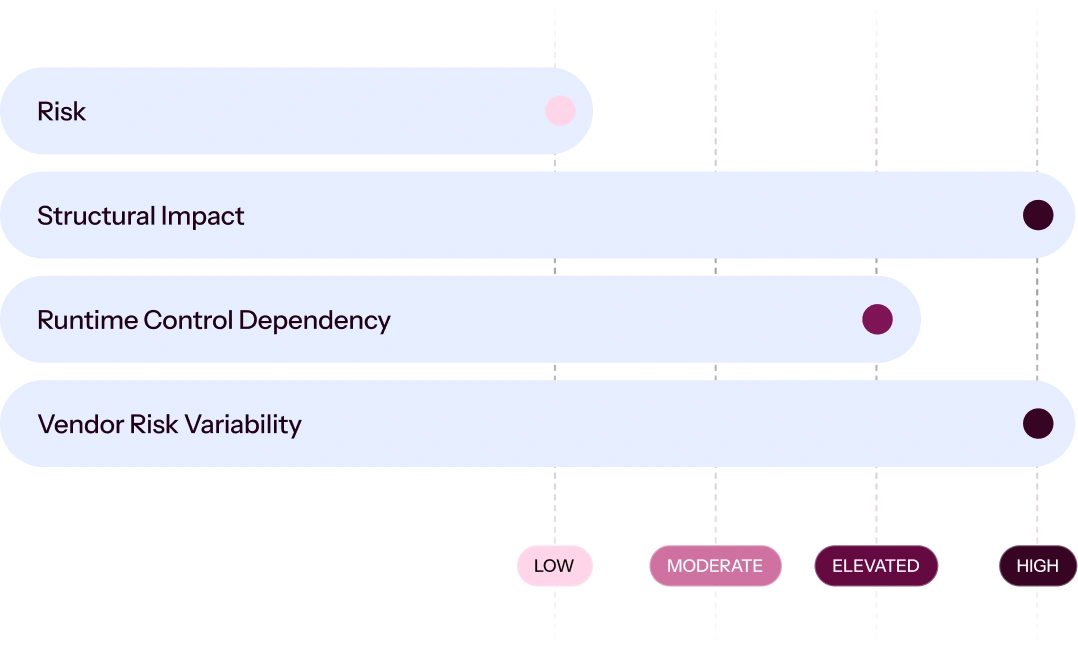
6. Design, Creative & Content Tools
Category risk score: 57
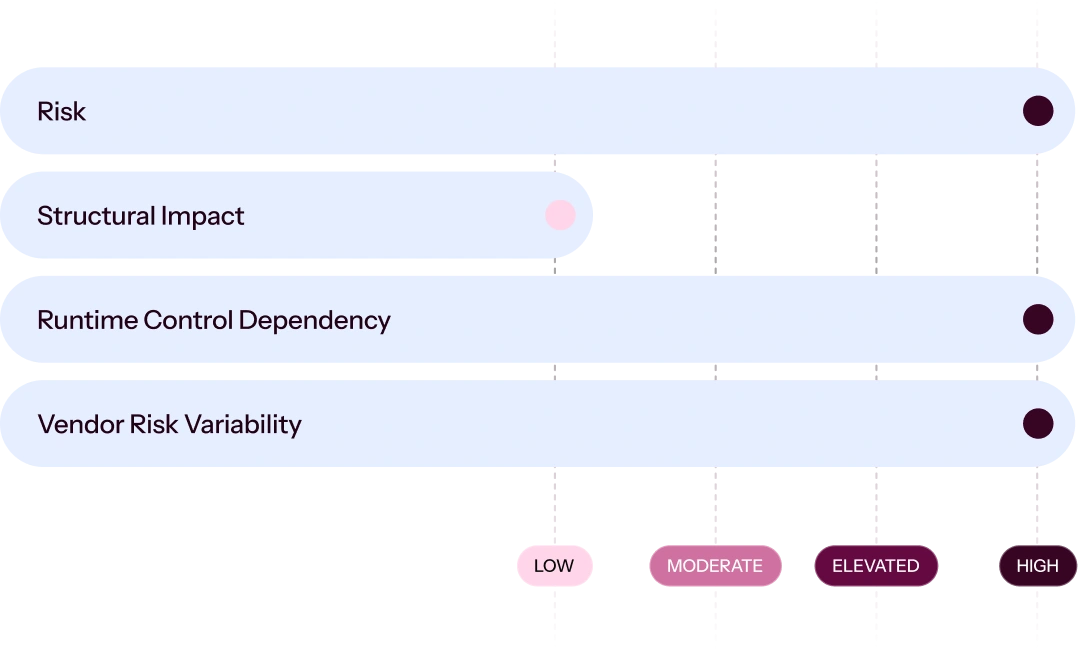
7. DevOps & Software Delivery Platforms
Category risk score: 24
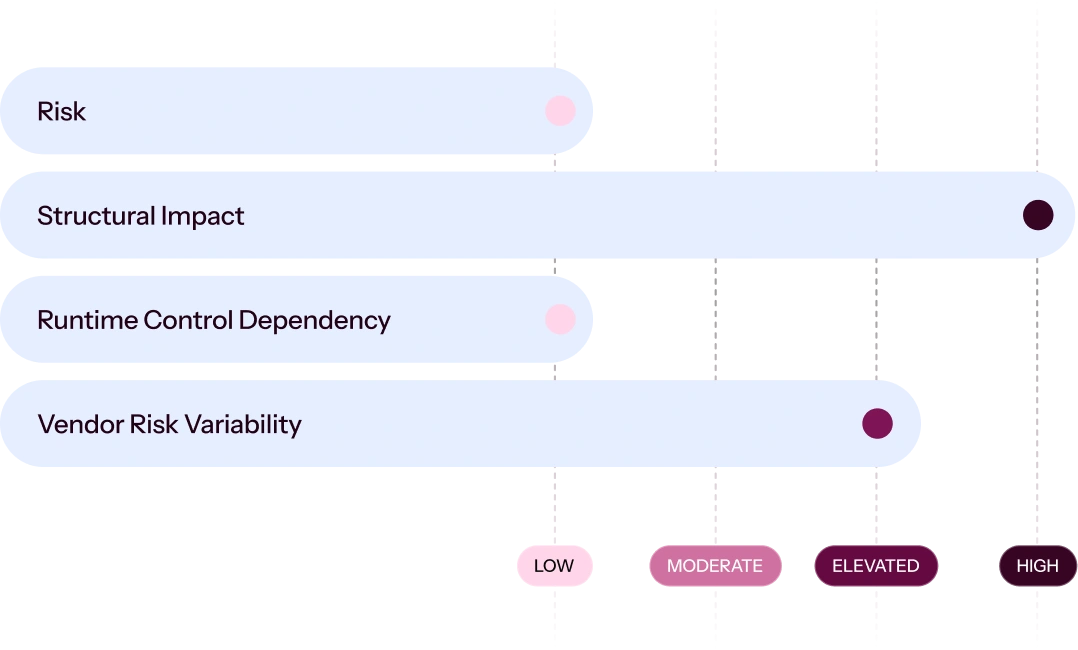
8. Enterprise AI Assistants & General AI Apps
Category risk score: 28
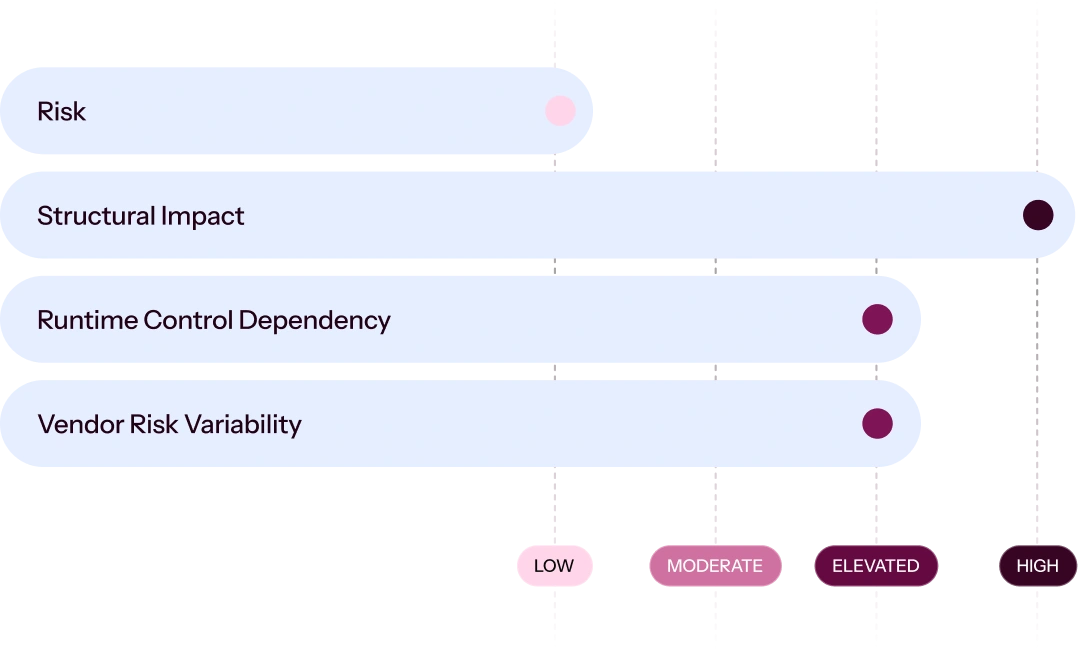
9. Finance, ERP, Accounting & Billing
Category risk score: 28
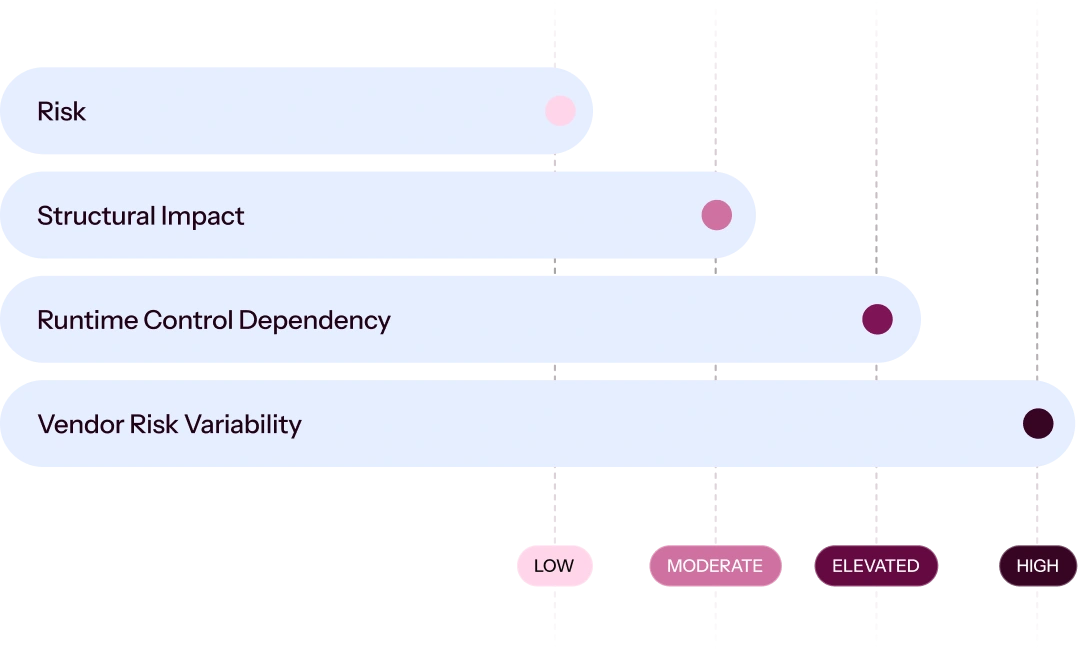
10. Foundation Models & AI Platforms
Category risk score: 34
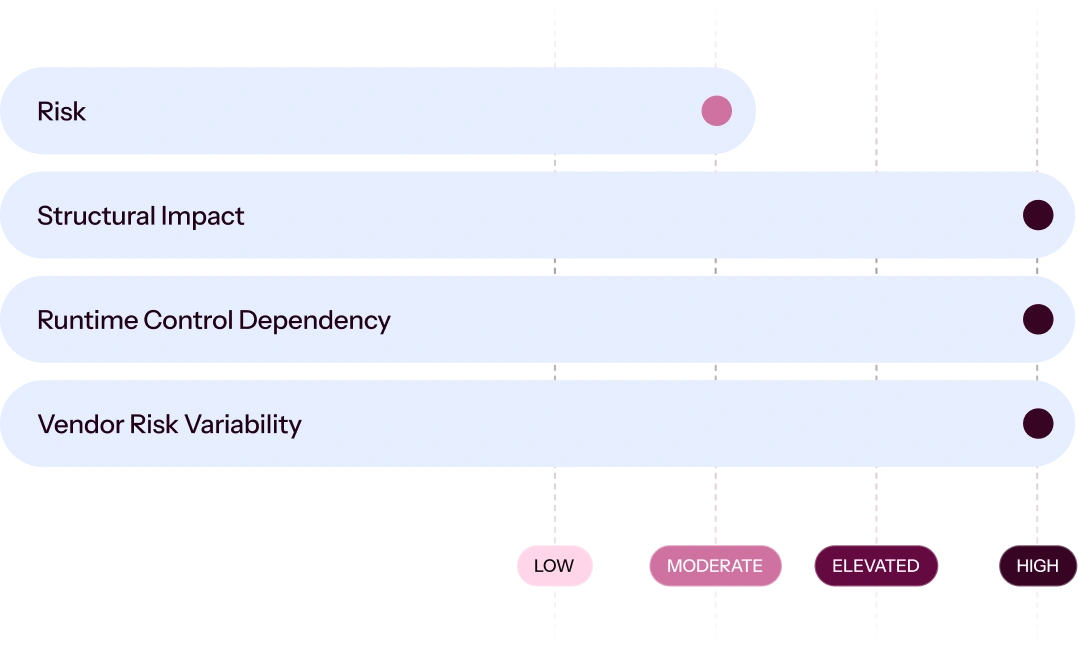
11. HR, HCM, HRIS & Payroll
Category risk score: 33
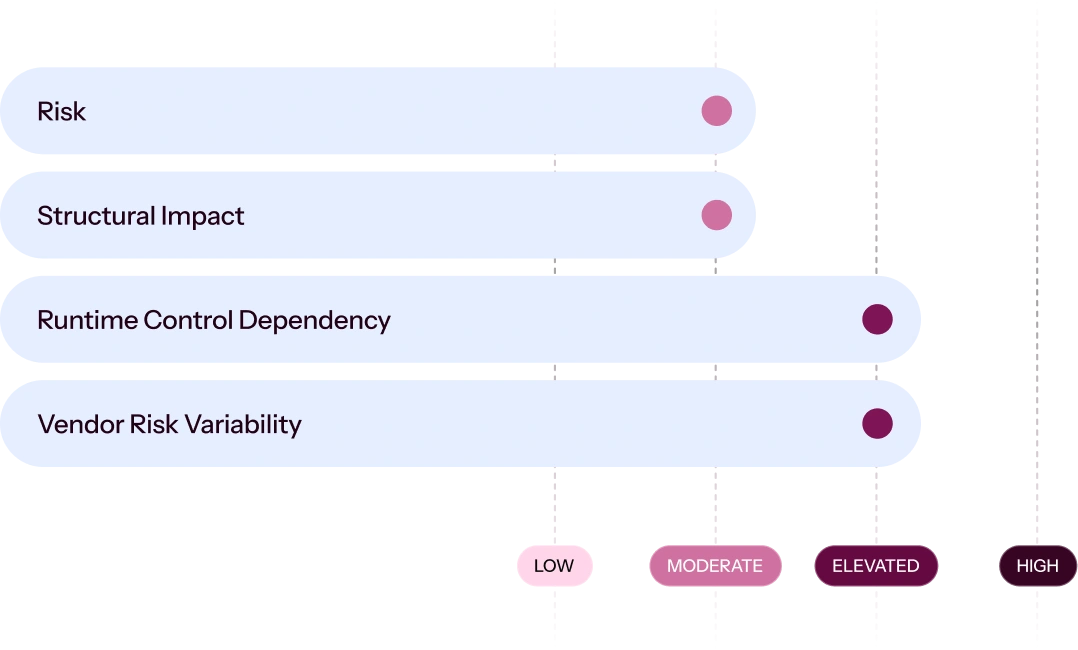
12. Marketing Automation, CRM & Email Marketing
Category risk score: 41
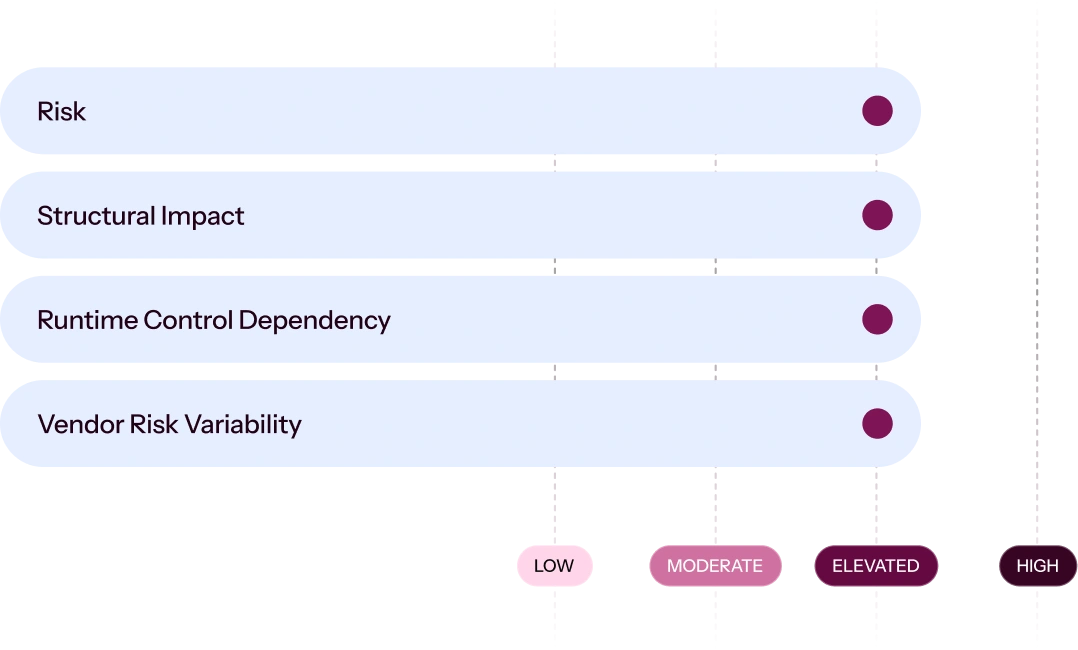
13. Productivity, Collaboration & Knowledge Management
Category risk score: 29
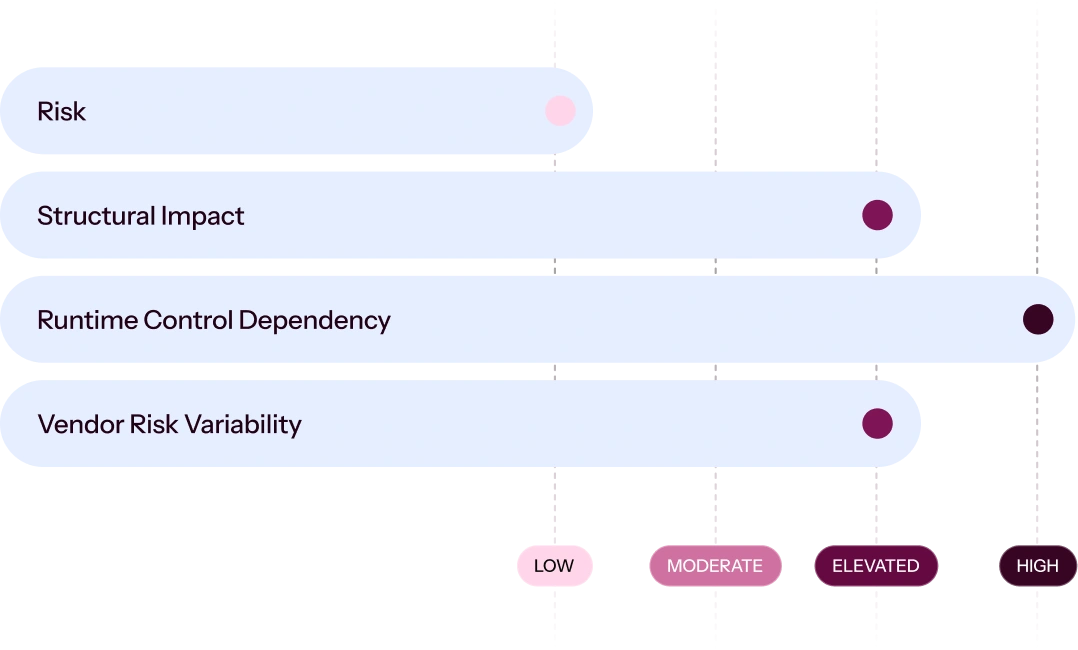
14. Research, Publications & Knowledge Platforms
Category risk score: 58
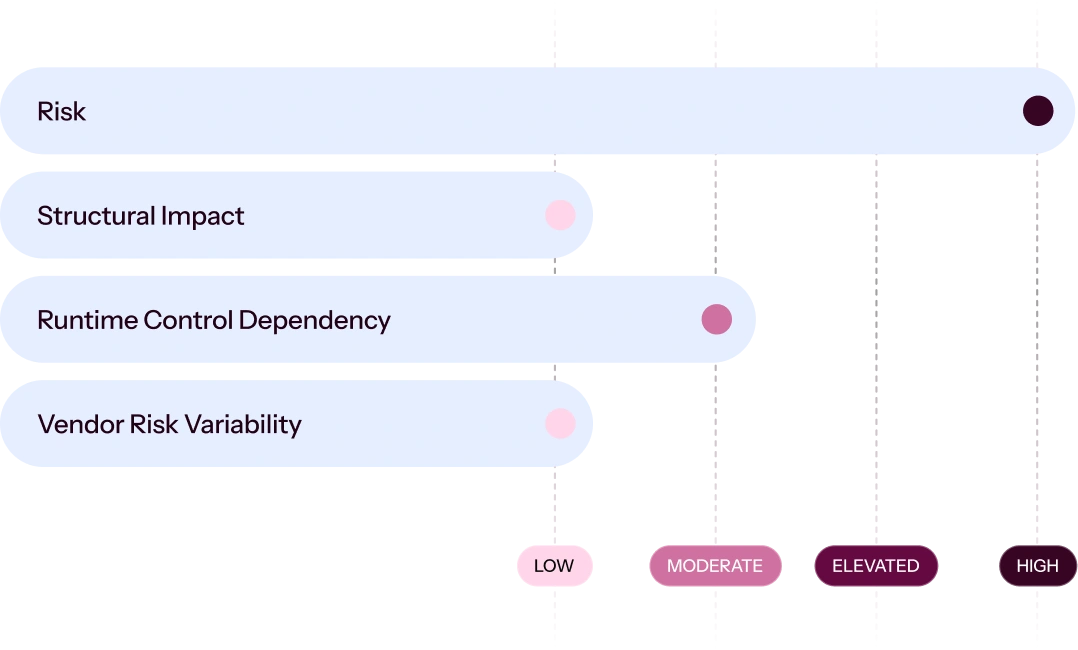
15. SEO, Content Optimization & Content Intelligence
Category risk score: 50
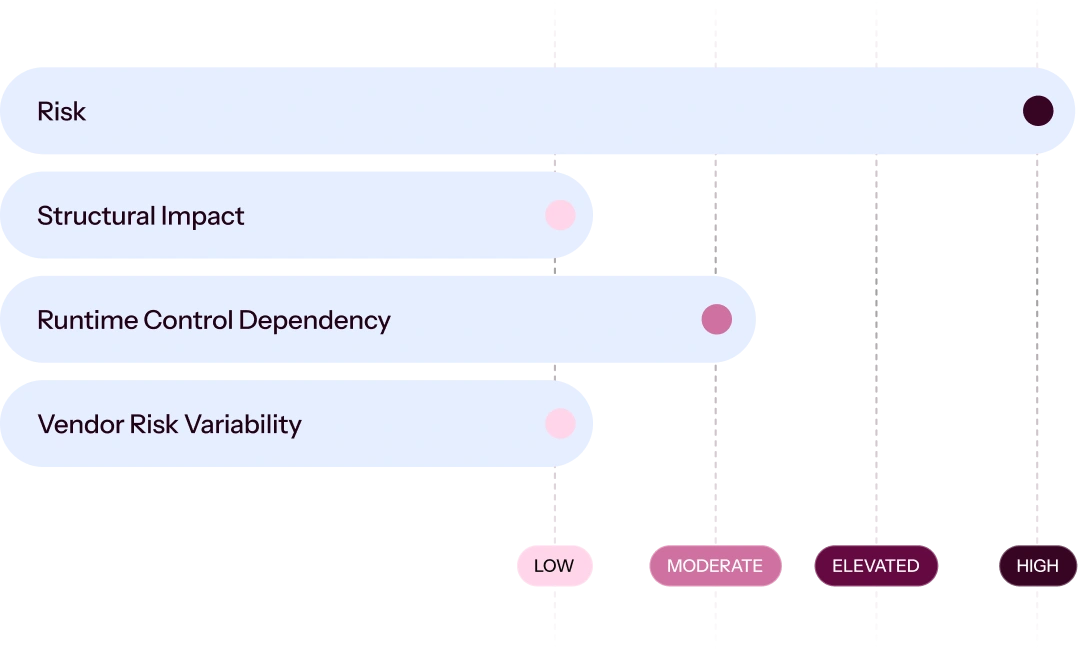
16. SEO, Content Optimization & Content Intelligence
Category risk score: 30
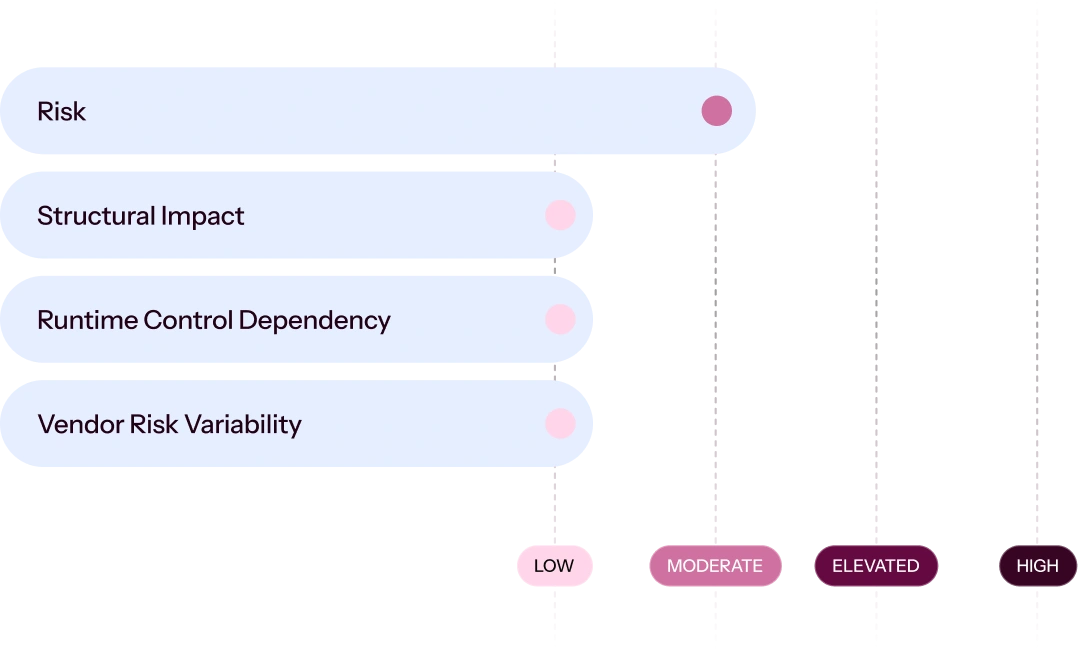
AI Introduces a New, Usage-Driven Risk Paradigm
AI is reshaping third-party risk by expanding the blast radius beyond traditional infrastructure. Categories such as Foundation Models & AI Platforms and Enterprise AI Assistants & General AI Apps combine high structural impact with elevated runtime dependency, while AI capabilities embedded in other tools extend exposure into previously lower-risk domains. This shift requires governance that addresses both vendor posture and internal usage in several categories.
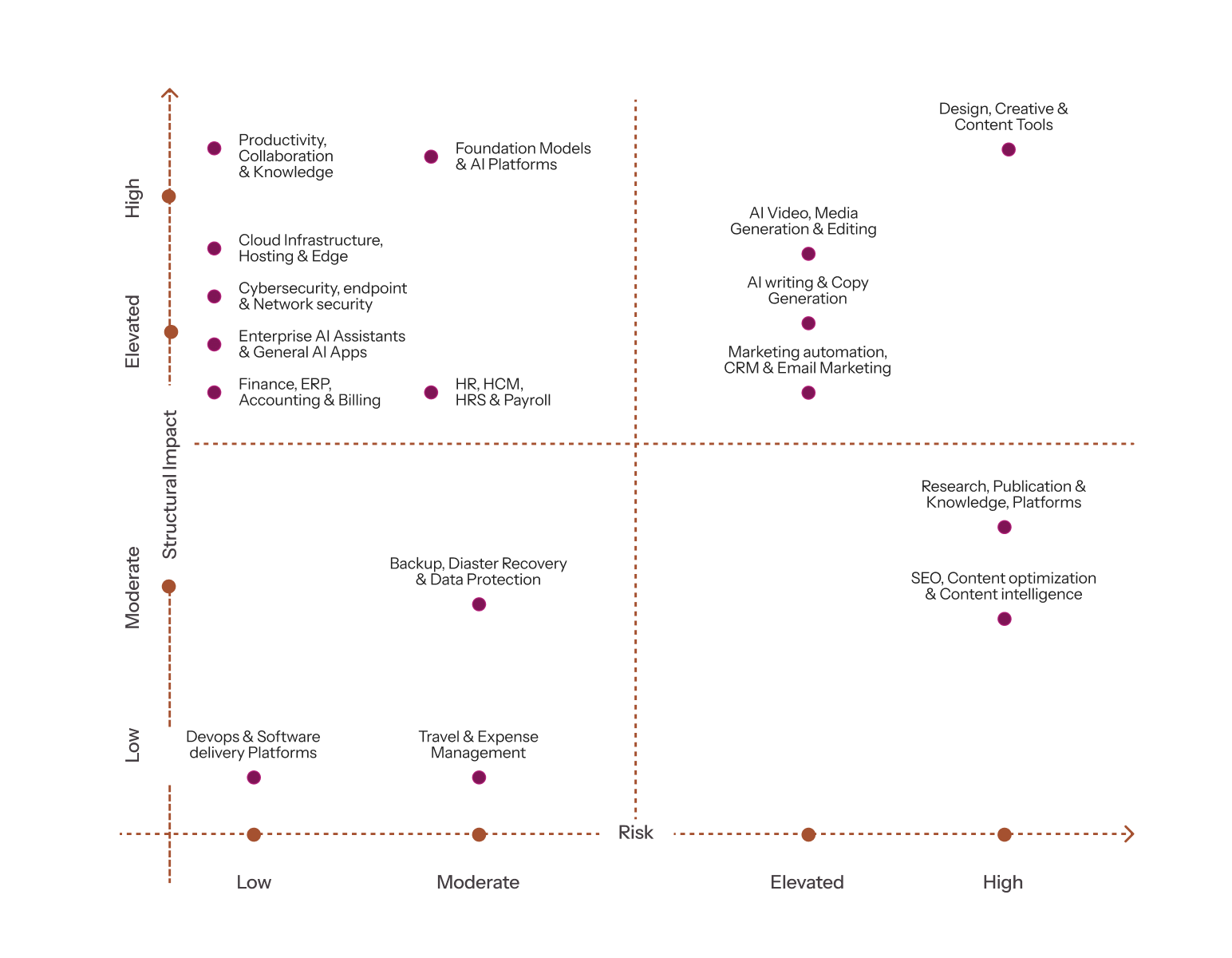
AI Is Expanding Blast Radius Across Vendor Categories
While backbone categories like Cloud Infrastructure, Cybersecurity, DevOps, and Backup & Disaster Recovery have always warranted prioritization, AI integrations are redefining their exposure. Enhanced data flows, automation, and interconnectivity increase the potential impact of misconfigurations and misuse, making existing prioritization strategies more critical—and more complex—than before. Some unexpected categories also see elevated exposure due to AI integration risk.
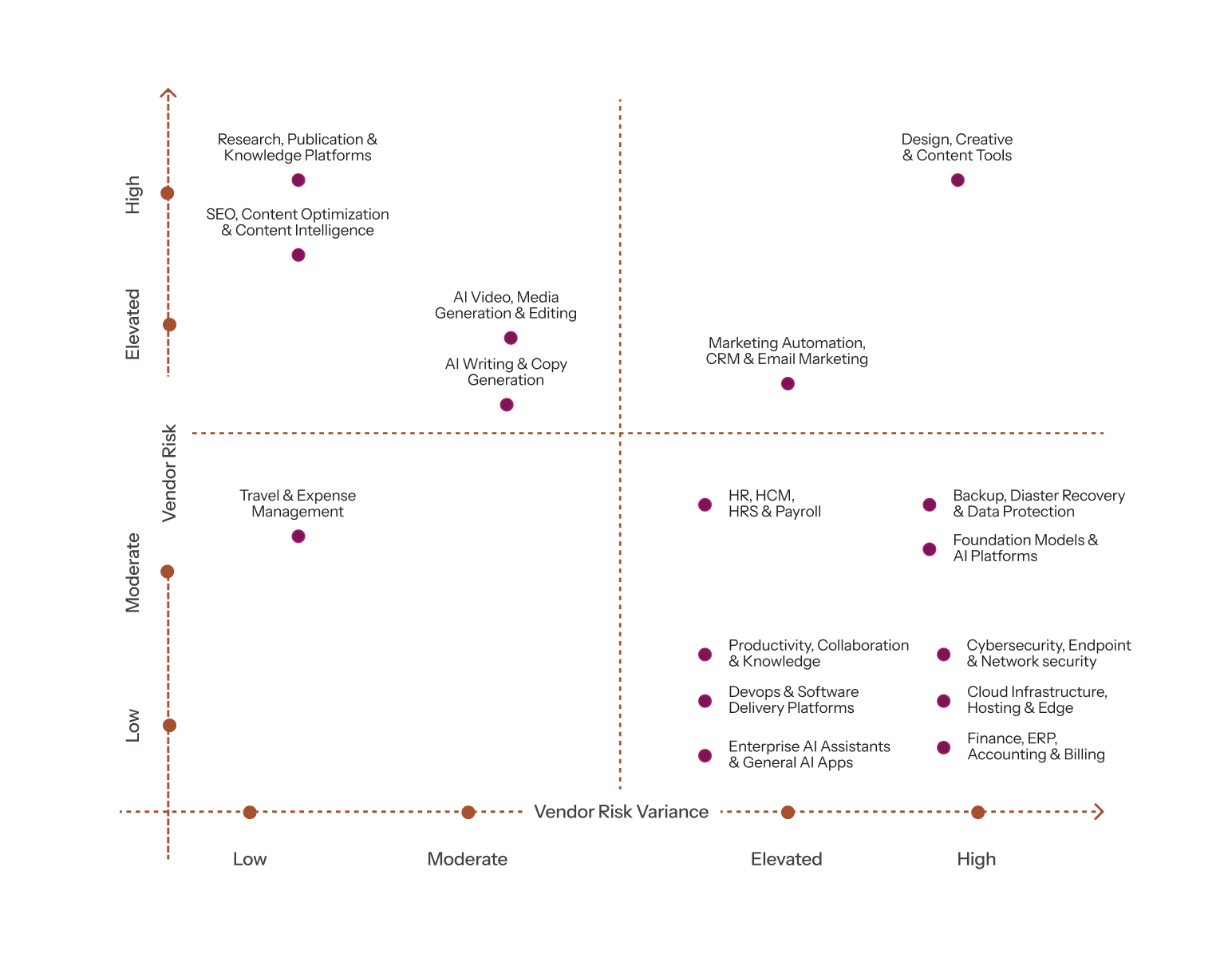
Vendor Variability Strengthens the Case for Defensible Selection
In high-impact categories such as Cloud Infrastructure, Backup & Disaster Recovery, Finance & ERP, and Foundation Models, governance maturity varies significantly between providers. For organizations that typically rely on a limited number of vendors in these domains, the report provides a defensible basis for more stringent vendor selection criteria and due diligence.
Frequently Asked Questions
Ready to Align Your TPRM Strategy with Real Enterprise Risk?
Download the Vendor Category Landscape, 2026, to gain actionable insights into how risk behaves across vendor categories and how to prioritize oversight effectively.