

TL;DR
| ISO 27001 software helps teams implement and maintain an Information Security Management System (ISMS) by centralizing policies, risks, controls, evidence, audit workflows, and continuous monitoring in a single platform. |
| This guide compares eight ISO 27001 tools for 2026: Sprinto, Delve, Drata, Vanta, Scytale, Hyperproof, ISMS.online, and Instant 27001, based on automation depth, usability, scalability, reporting, integration coverage, pricing transparency, and customer feedback. |
| Sprinto is positioned for cloud-first SaaS and mid-market teams that need automated evidence collection for audit readiness, real-time control monitoring, adaptive framework mapping, auditor-ready reporting, agentic AI support, and comprehensive integration coverage. |
| Other tools fit different needs: Delve for early-stage, fast certification; Drata and Vanta for structured compliance automation; Scytale for guided support; Hyperproof and ISMS.online for process-heavy environments; and Instant 27001 for a lightweight, budget-friendly ISO path. |
ISO/IEC 27001 is an international standard for building and maintaining an Information Security Management System (ISMS). Following the 2022 revision, ISO 27001 places greater emphasis on continuous risk management, cloud security, supplier oversight, and alignment with emerging technologies such as AI systems. Organizations are expected to demonstrate ongoing control effectiveness and not just point-in-time audit readiness.
Modern ISO 27001 software automates evidence collection through deep integrations with cloud providers, HR systems, and developer tools, continuously monitors control health, flags policy drift, and centralizes risk registers and documentation.
To identify the eight best tools, I evaluated them across automation depth, framework mapping capabilities, scalability, usability, reporting quality, integration coverage, pricing transparency, and real-world customer feedback from independent review platforms.
Top 8 ISO 27001 compliance tools as per usability, key features, pros, and cons
Most ISO 27001 compliance software in the market offers similar core capabilities. However, there are some meaningful differences that determine how much time and effort your team spends on staying compliant.
I’ve ranked the tools below based on their automation capabilities, balancing pros and cons that reflect both technical capabilities and customer experience.
| Category | Tool | Best fit |
| Most hands-off and automation-driven | Sprinto | SaaS businesses of any size needing continuous, low-touch compliance |
| Delve | Early-stage startups needing fast certification | |
| Balanced automation with structured workflows | Drata | Scaling SaaS companies |
| Vanta | High-growth tech firms | |
| Scytale | Teams preferring guided compliance support | |
| Built for structured, process-heavy environments | Hyperproof | Mid-market and enterprise organizations |
| ISMS.online | Organizations prioritizing formal ISO methodology | |
| Lightweight and cost-effective | Instant 27001 | Small startups seeking a fast-track ISO path that is budget-friendly. |
1. Sprinto
Sprinto, an autonomous trust platform, doesn’t just help you ‘get’ certified; it enables you to stay secure and continuously audit-ready. With Sprinto, you’ll find that ISO 27001 ‘maintenance’ happens in the background. It turns the complex Annex A controls into a series of automated health checks. If an employee isn’t offboarded correctly in your HRIS, or if an AWS bucket is left public, the platform pings you instantly. It’s the most ‘hands-off’ platform while still being 100% audit-ready.
“I loved that everything is actually connected. It’s not form-filling. Sprinto is actually checking my AWS environment for safety and security. Instead of me sharing a register of people, Sprinto simply looks at our G Suite to map and monitor risk. All compliance tasks are drilled down to existing systems, and that made me fall in love with Sprinto.”
– Ruben Stolk, Founder and CTO of Capptions (secured ISO 27001 certification 3X faster than an ISO consultant)
Best for: Cloud-first and growing SaaS companies and mid-market teams that want fast, continuous ISO 27001 readiness without investing in large internal GRC teams. Sprinto is especially useful for companies that plan to scale into additional compliance frameworks beyond ISO 27001.
Key features:
- Real-time control monitoring: 24/7 checks on ISO 27001 controls to detect misconfigurations, drift, and policy failures as they occur.
- Agentic AI assistants: AI-driven agents trained on your environment to help investigate gaps, answer auditor queries, and surface insights with context.
- Adaptive framework mapping: Auto-map ISO 27001 to other standards, custom frameworks, and customer questionnaires to eliminate duplication.
- Infinite integration capabilities: Connect unlimited tools via native integrations or flexible APIs to capture evidence and control data across your entire stack.
- Auditor-ready reporting: Pre-assembled evidence packages and dashboards that align with auditor expectations to shorten review cycles.
| Pros | Cons |
| Agentic AI for contextual gap analysis and audit assistance | Frequent updates for product features |
| A public-facing trust center that lets you securely share compliance status | Pricing provided via custom quote |
| Broad and flexible integration coverage across cloud and SaaS tools | Teams may need onboarding time to fully leverage advanced features |
2. Delve
Delve is a compliance platform that prioritizes speed through agentic AI. Unlike traditional tools that rely solely on API connectors, Delve uses AI agents to perform tasks like navigating interfaces for screenshots, drafting technical policies, and auto-filling complex security questionnaires based on live evidence.
Best for: Early-stage startups and AI-first companies that need to reach ISO 27001 or SOC 2 readiness in under a month with minimal administrative overhead.
Key features:
- AI-assisted policy generation: Creates editable security policies that are automatically mapped to specific compliance controls.
- Autonomous questionnaire responses: Uses existing compliance data to generate draft answers for incoming vendor security assessments.
- Continuous infrastructure scanning: Real-time monitoring of cloud environments and code repositories to detect security drift.
| Pros | Cons |
| Capable of moving companies from zero to audit-ready in weeks. | Optimized for cloud-native stacks; less effective for on-premise infrastructure. |
| Significantly reduces the number of manual tasks compared to legacy GRC tools. | Focuses primarily on high-demand standards like SOC 2 and ISO 27001. |
| Offers 1:1 Slack-based access to compliance experts for guided onboarding. | Newer to the market, with fewer enterprise-grade reporting features than larger peers. |
3. Vanta
Vanta is one of the oldest players in the compliance automation space, functioning as a comprehensive system of record for security programs. It is recognized for its extensive integration library and its AI suite, which helps teams identify gaps, perform vendor risk assessments, and automate access reviews.
Best for: High-growth startups and established tech firms that require a widely recognized platform with deep integration into a broad range of SaaS tools.
Key features:
- Trust center: A public-facing portal that allows prospects to review security posture and download documents under NDA.
- Automated access reviews: Streamlines the process of verifying user permissions across all integrated applications.
- Vendor risk management: Automates the discovery and security assessment of third-party vendors within the supply chain.
| Pros | Cons |
| Connects natively with over 300+ cloud, HR, and developer applications. | Costs can increase rapidly with add-on modules and additional frameworks. |
| Highly familiar with the global audit community, which often leads to faster review cycles. | Can be difficult to customize for non-standard security processes or unique edge cases. |
| Provides a clear, single view of compliance health across more than 35 different frameworks. | Users report that bulk actions and navigation can become cumbersome as organizations grow. |
4. Hyperproof
Hyperproof is a professional-grade GRC platform designed to handle the complexity of multi-framework compliance programs. It emphasizes control health and deduplication, allowing organizations to map one security control to multiple regulations, such as SOX, ISO 27001, and HIPAA, simultaneously.
Best for: Mid-market and enterprise organizations that manage overlapping compliance requirements across different business units or global regions.
Key features:
- Hypersync automation: Deep connectors that automatically pull evidence into a centralized “source of truth” to reduce manual uploads.
- Audit management folders: Dedicated workspaces that provide auditors with direct, restricted access to verified evidence and documentation.
- Risk register: A mature module for identifying, scoring, and tracking the mitigation of organizational risks.
| Pros | Cons |
| Supports custom fields, scopes, and workflows tailored to specific organizational needs. | The UI can feel cluttered when managing hundreds of controls across multiple departments. |
| Simplifies the process of delegating compliance tasks to different “control owners” across the company. | While functional, in-depth analytics often require exporting data to external BI tools. |
Download ISO 27001 Controls
5. Drata
Drata is a continuous compliance automation platform built to help companies achieve and maintain frameworks like SOC 2, ISO 27001, HIPAA, and more. It focuses heavily on real-time control monitoring and automated evidence collection, positioning itself as a trust management solution that combines compliance workflows with customer-facing transparency.
Best for: SaaS and technology companies that want strong automation with continuous monitoring and a polished user experience across multiple frameworks.
Key features:
- Continuous control monitoring (CCM): Always-on automated testing of security controls to detect drift and misconfigurations in real time.
- Extensive integration library: 300+ native integrations across cloud providers, HRIS, identity, ticketing, and DevOps tools.
- Audit hub: A centralized workspace where auditors can securely access evidence, leave comments, and download reports without manual back-and-forth.
| Pros | Cons |
| Strong automation and broad integration coverage | Premium pricing with add-ons for advanced modules |
| Real-time monitoring reduces audit surprises | Some controls may still require manual validation |
| Well-suited for scaling compliance programs | Custom workflows can feel rigid in complex environments |
6. Scytale
Scytale is a compliance automation platform that combines software with in-house audit expertise to streamline certifications like SOC 2, ISO 27001, HIPAA, and PCI DSS. It differentiates itself through a hands-on, guided approach that blends automation with direct auditor collaboration.
Best for: Startups and growth-stage companies that prefer a guided, white-glove compliance experience with bundled audit support.
Key features:
- Automated evidence collection: Integrates with cloud infrastructure and SaaS tools to gather and organize audit artifacts.
- Dedicated compliance experts: In-house specialists who guide teams through gap assessments, remediation, and audit preparation.
- Integrated audit services: Close coordination with audit partners to reduce friction between readiness and certification.
- Policy and risk management modules: Templates and structured workflows for risk tracking and policy lifecycle management.
| Pros | Cons |
| Structured onboarding for first-time certifications | Heavier reliance on human guidance vs. deep automation |
| Good fit for teams without internal GRC expertise | May not offer the same integration breadth as larger platforms |
7. Instant 27001
Instant 27001 is a lightweight ISO 27001-focused compliance platform designed to help startups and small teams move from zero to certification quickly. It combines structured templates, guided workflows, and limited automation to accelerate ISMS implementation without overwhelming users with enterprise-level complexity.
Best for: Early-stage startups and very small SaaS companies seeking a straightforward, fast-track, and cost-effective path to ISO 27001 certification.
Key features:
- Pre-built policy templates: Ready-to-use documentation tailored for ISO 27001 requirements.
- Basic evidence tracking: Centralized repository for uploading and organizing audit artifacts.
- Task management workflows: Assigns control ownership and tracks remediation progress.
| Pros | Cons |
| Cost-effective for small teams | Limited automation compared to modern GRC platforms |
| Quick setup for ISO-only needs | Primarily focused on ISO 27001, not multi-framework heavy |
| Structured guidance for first-time certification | Fewer deep integrations with complex tech stacks |
8. ISMS.online
ISMS.online is a structured compliance platform purpose-built for ISO standards, particularly ISO 27001. It provides a guided environment for building and maintaining an ISMS, combining documentation management, risk tracking, and workflow automation within a centralized system.
Best for: Organizations of all sizes that want a methodical, standards-driven approach to ISO 27001 implementation and long-term ISMS maintenance.
Key features:
- Virtual coach guidance: Built-in guidance aligned with ISO 27001 clauses to walk teams through certification requirements.
- Policy and document control: Centralized version-controlled repository for ISMS documentation.
- Audit and review workflows: Tools for internal audits, management reviews, and continuous improvement tracking.
| Pros | Cons |
| Strong alignment with ISO methodology | Less automation for cloud-native evidence collection |
| Clear structure for long-term ISMS maintenance | UI may feel traditional compared to newer platforms |
How did I evaluate the above tools?
There are plenty of ISO 27001 tools in the market, and the “best” one really depends on your context. The right choice will vary based on the size of your organization, the complexity of your IT environment, and the industry you operate in.
A platform packed with deep compliance automation might deliver massive value for a cloud-native SaaS company with in-house development, but that same level of sophistication may be unnecessary for a smaller, low-tech business like a facilities management firm. The key is alignment.
I considered five main factors to evaluate the above tools beyond basic feature lists and marketing material:
1. Automation depth and continuous control monitoring
ISO 27001 is an ongoing practice. I evaluated how deeply each platform automates evidence collection across cloud infrastructure, HR systems, and DevOps tools. I also assessed whether controls are continuously monitored for drift and failures, or if teams still rely heavily on manual uploads and periodic checks.
2. ISMS strength and framework alignment
ISO 27001 requires a structured ISMS, including risk assessments, policy lifecycle management, internal audits, and management reviews. I reviewed how well each tool supports Annex A control mapping, risk registers, documentation workflows, and cross-framework alignment without duplicating work.
3. Usability and implementation effort
Even powerful tools fail if they’re hard to implement. I examined onboarding complexity, clarity of workflows, delegation capabilities, and how intuitive the UI feels for non-technical teams managing compliance programs.
4. Integration coverage and scalability
Modern ISO 27001 programs depend on integration depth. I looked at the breadth and flexibility of integrations, API capabilities, and whether the platform scales across multiple entities, regions, or additional frameworks.
5. Pricing transparency and real-world feedback
Finally, I considered the total cost of ownership, including pricing structure, scalability costs, and renewal patterns. I also analyzed recurring themes from independent review platforms like G2 and Trustpilot to validate usability, support quality, and long-term operational friction.
How should you evaluate the right software for your business?
Before you commit, step back and evaluate how the tool will function inside your real workflows, not just in a polished demo.
1. Start with your operational complexity
Assess the size of your organization, the maturity of your ISMS, and the complexity of your tech stack. Cloud-native SaaS companies with DevOps pipelines need deep integrations and continuous monitoring. Smaller or less technical teams may benefit more from structured guidance and simpler workflows.
2. Measure real automation, not feature lists
Ask what manual work actually disappears. Does the platform continuously collect evidence? Does it monitor control drift in real time? Or are you still uploading screenshots and updating spreadsheets? True automation should significantly reduce engineering involvement.
3. Evaluate scalability beyond ISO 27001
ISO 27001 is often the starting point. Consider whether the platform can map controls across SOC 2, HIPAA, GDPR, or custom frameworks without duplicating effort. Make sure pricing and architecture don’t become bottlenecks as you grow.
4. Consider the total cost of ownership
Don’t just compare base pricing. Factor in add-ons, audit costs, implementation time, internal bandwidth, and long-term scalability. The right software should reduce operational overhead — not quietly increase it.
Reduce your engineering bandwidth by 98%
I’ve seen ISO 27001 compliance consume far more engineering time than most teams expect. What starts as “just a certification” quickly turns into exporting AWS CloudTrail logs, validating IAM role configurations, reviewing encryption settings, generating access review reports, mapping controls to Annex A, and responding to endless auditor follow-ups.
That’s exactly why I believe automation has to do the heavy lifting. Ensure that whatever tool you choose does not end up costing you money or bandwidth.
With Sprinto, you don’t have to chase screenshots or ask engineers for one-off exports. It connects to almost anything with its autonomous trust engine. Directly to your cloud, identity providers, HR systems, and DevOps tools, runs control checks continuously, flags drift in real time, and keeps documentation audit-ready in the background.
If your goal is ISO 27001 certification without sacrificing product velocity, Sprinto is built to make compliance practically invisible. See for yourself.
Frequently asked questions
The best ISO 27001 software automates evidence collection, simplifies risk management, and keeps you continuously audit-ready. Enterprise tools support complex environments with deep integrations and governance workflows, while mid-market and growth-stage companies need a balance of automation and usability.
Sprinto works well across segments because it auto-discovers your tech stack, maps controls automatically, and provides real-time readiness dashboards, reducing manual effort regardless of company size.
Startups need fast implementation, minimal overhead, and clear guidance. The ideal solution offers pre-built policies, automated control mapping, and step-by-step workflows. Sprinto stands out for startups with rapid onboarding, continuous monitoring, and live readiness scoring, helping lean teams achieve certification without hiring large compliance teams. It also scales as the company grows.
Focus on automation depth, integration coverage (cloud, IAM, HRIS, ticketing), built-in risk management, and audit support. The best platforms reduce manual evidence collection and provide visibility into compliance gaps.
Yes. Many businesses pursue SOC 2, HIPAA, GDPR, or other frameworks alongside ISO 27001. The best ISO 27001 software allows control reuse across standards to avoid duplicate work. Sprinto’s adaptive framework engine ingests new frameworks and auto-maps overlapping controls, accelerating multi-framework readiness.
No software can guarantee certification. Auditors assess implementation and effectiveness. However, the best ISO 27001 software significantly improves preparedness by automating evidence tracking, risk documentation, and control monitoring.
Key features include automated evidence collection, risk assessment tools, control mapping, policy management, real-time dashboards, and audit workflows. Strong integrations are critical to reduce manual work. Sprinto delivers all of these while providing ongoing monitoring and actionable insights to maintain compliance beyond the initial certification.

Author
Pansy
Pansy is an ISC2 Certified in Cybersecurity content marketer with a background in Computer Science engineering. Lately, she has been exploring the world of marketing through the lens of GRC (Governance, risk & compliance) with Sprinto. When she’s not working, she’s either deeply engrossed in political fiction or honing her culinary skills. You may also find her sunbathing on a beach or hiking through a dense forest.Go beyond the surface and uncover the governance, risk, and compliance insights that actually matter.


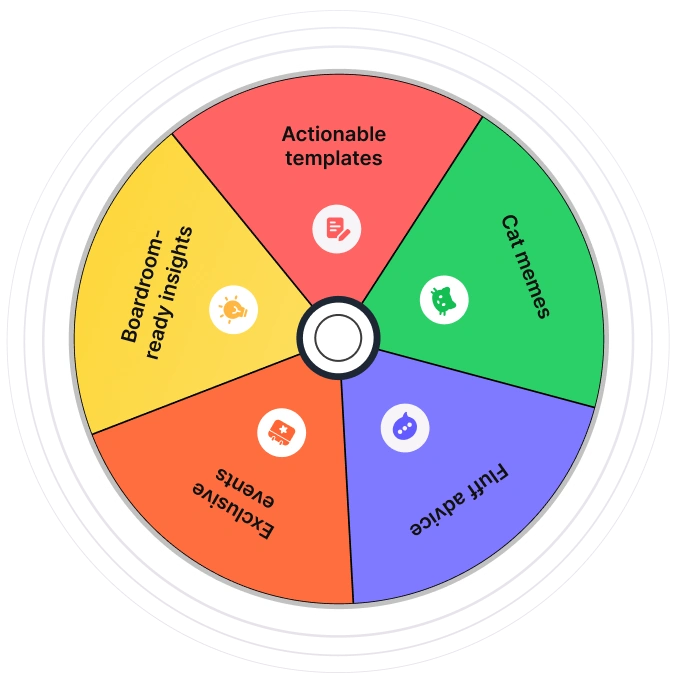
Win digital goodies for boardroom success


Explore more ISO 27001 articles
ISO 27001 Overview & Requirements
ISO 27001 vs Other Frameworks
ISO 27001 Audit & Certification Process
ISO 27001 Management & Assessment
ISO 27001 Implementation & Automation
ISO 27001 Industry-Specific Applications
research & insights curated to help you earn a seat at the table.