


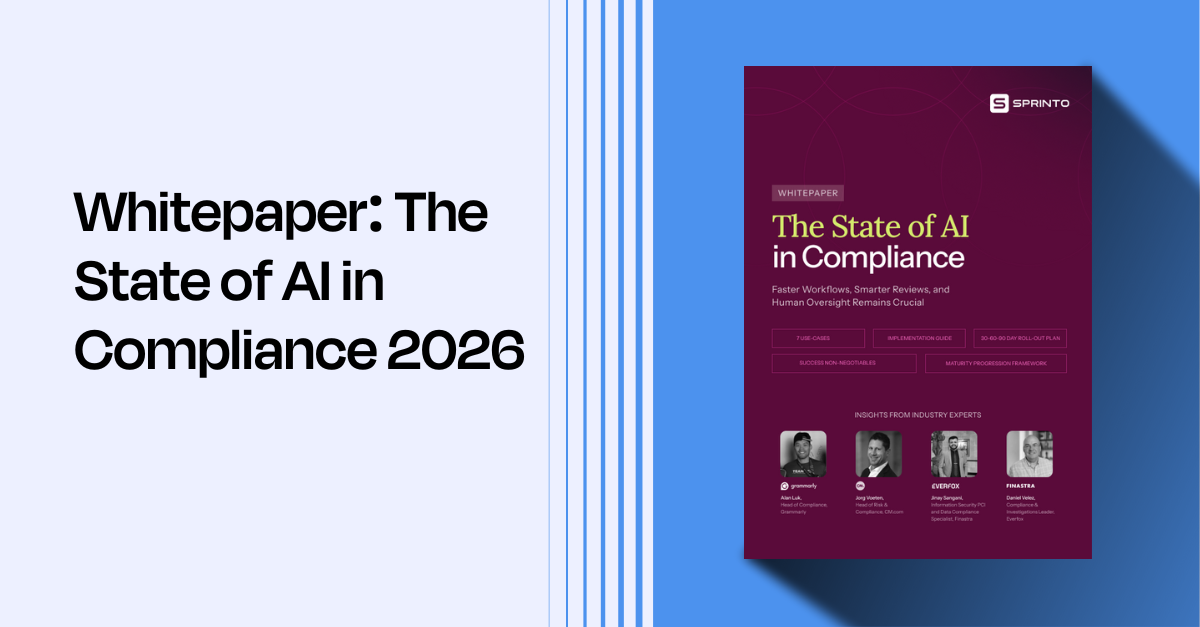
GRC teams are at very different stages of their AI journey. Some have already begun experimenting with AI but are now looking for ways to measure success, strengthen workflows, or fine-tune the quality of outputs. Others have run into early hurdles and need guidance on guardrails, oversight, or change management. Many teams are still figuring out where to start, while some already know the direction they want to take but need validation—and real success stories—to get leadership on board.
We created The State of AI in Compliance 2026 to help GRC teams in all of these situations. It reveals how artificial intelligence is beginning to reshape everyday compliance workflows across mid-market organizations. We also address the natural hesitation many teams have toward autonomous AI, and show how supervised, human-in-the-loop models are working today. The whitepaper, available as a free download, brings together insights from compliance, risk, and security leaders at global companies, along with findings from major industry studies.
- Sprinto has launched a new whitepaper, The State of AI in Compliance 2026, designed to be a hands-on guide for GRC teams.
- The free whitepaper covers seven practical AI use cases, early success metrics, recommended workflows, maturity stages, and a 30–60–90 day rollout plan.
- Insights come from compliance teams already achieving results with AI, including leaders at Grammarly, CM.com, Finastra, and Everfox.
At the center of the whitepaper are seven practical AI use cases that compliance teams at companies such as Grammarly, CM.com, Finastra, and Everfox have piloted. These examples demonstrate how AI is already reducing manual effort across policy drafting, risk review, reporting, documentation checks, and more, while maintaining human oversight at every step. Compliance experts who share their insight in the whitepaper describe AI as a “force multiplier,” helping their teams move faster without losing context, judgment, or accountability.
The whitepaper examines what real teams are doing right now or have already tried, what’s working, and what guardrails they’re establishing to ensure safe, accurate, and explainable AI-assisted workflows. It also explains why the most effective compliance programs continue to rely on humans to validate, approve, and guide AI outputs.
Another key element of the whitepaper is Sprinto’s AI maturity model, which helps organizations understand their current position on the adoption journey and what a realistic next step entails. For teams just getting started, the whitepaper includes a 30–60–90-day activation roadmap to guide early pilots and introduce AI in a controlled, responsible manner.
Across the industry, AI is already reducing busywork and adding a layer of intelligence to routine GRC processes. Sprinto has seen customers achieve up to 80% faster questionnaire turnaround, which directly improves deal velocity—and that’s only one example. In the months ahead, AI will play an even stronger role in integrating compliance into everyday workflows and helping programs keep pace with rapidly evolving regulatory landscapes and risk environments.
We created this whitepaper to enable teams to learn from one another and adopt AI in a practical, accountable, and scalable manner. Across all interviews and research inputs, a few themes consistently stood out:
- AI delivers the most value to GRC teams when it supports structured workflows, not ad-hoc tasks.
- Clear success metrics help teams show early wins and secure buy-in.
- Strong governance guardrails ensure AI remains reliable and explainable as its role grows.
- The most mature teams treat AI as an accelerator, not an autopilot, and anchor every output in human review.
- Different organizations begin their AI journey from very different starting points. Some start by improving documentation quality, others by automating repetitive tasks, and some by using AI to strengthen risk visibility. There’s no single path, but there is a shared direction: toward accelerated workflows, fewer blind spots, and more predictable assurance cycles.
Whether you’re beginning your AI journey, refining existing pilots, or validating a roadmap for leadership, this whitepaper provides a starting point, along with a glimpse into what’s next for compliance programs navigating rapid change.

Raynah
Raynah is a content strategist at Sprinto, where she crafts stories that simplify compliance for modern businesses. Over the past two years, she’s worked across formats and functions to make security and compliance feel a little less complicated and a little more business-aligned.
Go beyond the surface and uncover the governance, risk, and compliance insights that actually matter.


Win digital goodies for boardroom success


Explore more



research & insights curated to help you earn a seat at the table.