TL,DR:
| ISO 27001 vulnerability management identifies and mitigates weaknesses in information systems through 5 stages: asset inspection, discovery and evaluation, action planning, implementation of fixes, and continuous improvement |
| CVSS scores severity on a scale of 0 to 10, but organizations must also consider vulnerability visibility, exploitability, and business impact when prioritizing which remediation efforts to address first |
| Four risk response strategies apply: acceptance (document acknowledged risks), transfer (shift liability through insurance or contracts), mitigation (implement controls to reduce impact), and avoidance (eliminate the risk source entirely) |
Staying vigilant can go a long way in preventing risk. A number of threats are known to the organization and can be prevented by implementing simple measures such as strong passwords and firewall configurations. Some others may require more complex measures, constituting a strong security posture. ISO 27001 vulnerability management, therefore, aims to proactively address any weaknesses and fix security gaps.
The ISO 27001 standard focuses on designing and deploying an effective ISMS and vulnerability management is crucial for information security. This blog delves into the stages of ISO 27001 vulnerability management along with the best practices that help secure your ISMS.
What is ISO 27001 vulnerability management?
ISO 27001 vulnerability management is the process of identifying and mitigating vulnerabilities within the organization’s information systems in order to preserve the confidentiality, integrity, and availability of sensitive data.
This involves implementing a set of vulnerability management practices laid down by the ISO 27001 standard and enabling the protection of information assets.
ISO 27001 vulnerability management requirements
ISO 27001 does not require one specific scanner, remediation tool, or scan frequency. It expects a defensible process for identifying technical weaknesses, assessing risk, taking action, and keeping evidence.
The primary control is Annex A 8.8, Management of technical vulnerabilities. In practice, this means you should be able to show:
- Asset coverage: Which systems, endpoints, cloud services, repositories, dependencies, and internet-facing assets are in scope.
- Reliable sources: How you receive vulnerability information from scanners, VAPT reports, cloud security tools, dependency scanners, vendor advisories, and internal testing.
- Risk-based prioritization: How severity, exploitability, exposure, asset criticality, and business impact affect remediation order.
- Ownership: Who owns triage, who fixes the issue, who approves exceptions, and who confirms closure.
- Remediation timelines: Target timelines by severity and exposure, with a process for overdue items.
- Treatment decisions: Whether each issue is remediated, mitigated, accepted, transferred, or avoided.
- Validation: Evidence that the patch, configuration change, dependency upgrade, or compensating control worked.
- Audit records: Scan reports, tickets, change approvals, exception notes, retest results, and management review records.
For an ISO 27001 audit, the most compelling evidence isn’t just a clean scan. Instead, it’s a clear, traceable chain from identifying a risk, making a decision, assigning an owner, implementing a fix or exception, and finally validating the resolution.
What are the stages of ISO 27001 vulnerability management?

A vulnerability is a weakness in the assets that can be exploited by a malicious actor and can lead to significant risk. Managing vulnerabilities hinges on an iterative approach throughout their lifecycle—from discovery to resolution, validation, and process improvement.
ISO 27001 vulnerability management can be explained in 5 stages:
1. Asset inspection
The initial step is to gain a clear understanding of asset security and take inventory of assets that are most susceptible to vulnerabilities. This could involve employment of methods such as physical inspection, configuration review, network traffic analysis, log analysis, and more.
2. Discovery and evaluation
Assessing vulnerabilities efficiently requires conducting both periodical internal and external vulnerability scans. Using vulnerability scanning tools such as Qualys and Nessus can help streamline the process. Penetration tests can also provide crucial insights into potential vulnerabilities.
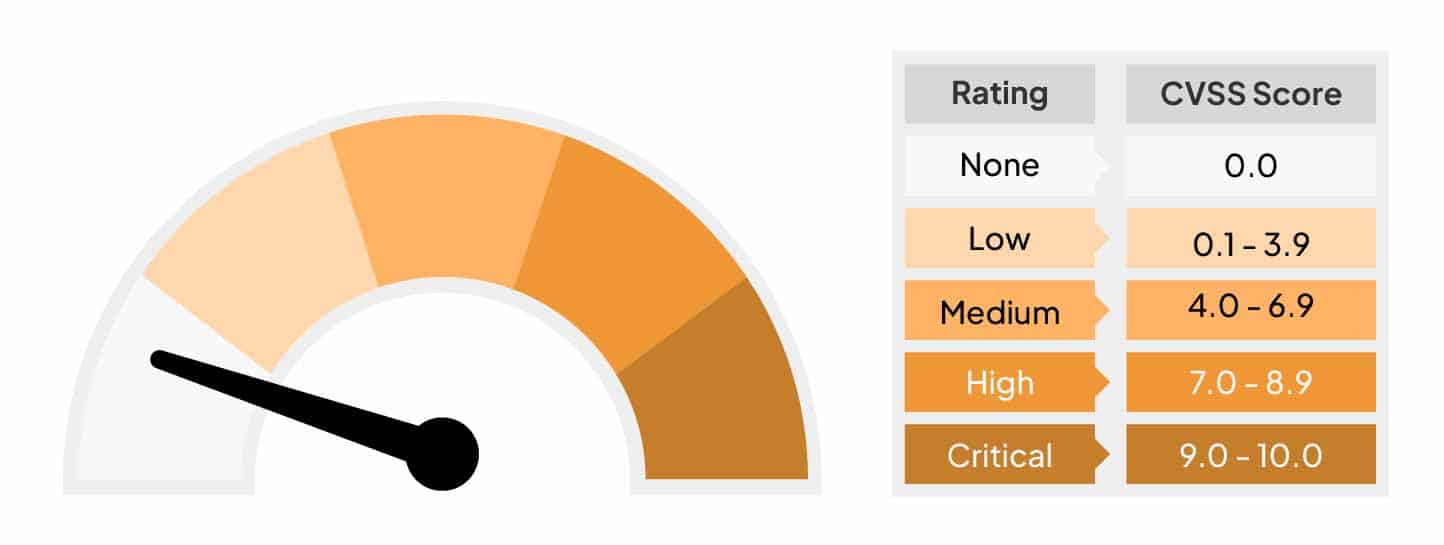
Common vulnerability scanning systems (CVSS) typically score severity on a scale of 0 to 10, 0 being the least severe. Most scanners incorporate these scores in their reports, aiding in better decision-making.
Do not restrict vulnerability management to CVEs alone. For ISO 27001, any weakness that introduces a security risk should be evaluated. This can include exposed cloud storage, leaked secrets, overly permissive IAM roles, unsupported software, unreviewed open-source dependencies, vulnerable containers, or misconfigured network rules. A CVSS score is useful, but it should not be the only trigger for action. Teams should also consider whether the asset is internet-facing, business-critical, regulated, actively exploited, or connected to sensitive data.
3. Initiate the action plan
The next appropriate step is to apply risk response strategies. The tactical plan for each type of vulnerability depends on complexity and timing.
Risk acceptance: This strategy involves acknowledging the risks that align with an organization’s risk appetite. These must be documented to clarify that no action will be taken for remediation.
Risk transfer: Risk transfer is shifting the responsibility of action to other parties. You can sign vendor contracts, get insurance
Risk mitigation: Mitigation measures reduce the probability or impact of risk. For example, implementing security controls like access controls, MFA, antivirus, employing secure coding practices, educating, and training staff etc.
Risk remediation: Risk remediation aims to remove the threat/risk. Examples include, applying patches and updates, reviewing codes, making configuration changes etc.
4. Verify remediation
Vulnerability management is a cyclical exercise of continuous assessment and remediation. It is imperative to set up a process to reassess the effectiveness of risk treatment efforts.
The reassessment includes validating the implementation of corrective action and conducting a follow-up scan to ensure continued protection.
5. Document and review regularly
Documentation is necessary compliance evidence for vulnerability management. Everything from the asset inventory and policies to the assessment process and remediation plan must be documented.Regular monitoring mechanisms help catch and resolve any patterns of recurrence.
Download your ISO 27001 Controls list here
Examples of ISO 27001 vulnerability management
Here are a few practical examples of vulnerability management under ISO 27001:
- Patching an internet-facing server: A scan identifies a critical vulnerability on a public server. The security team confirms exposure, assigns the issue to infrastructure, tracks the patch in a ticket, runs a follow-up scan, and stores the ticket and scan result as audit evidence.
- Fixing a vulnerable open-source dependency: A dependency scanner flags a high-risk package in a production application. Engineering updates the package, tests the build, links the pull request to the remediation ticket, and documents the release.
- Correcting a cloud misconfiguration: A cloud security tool detects an overly permissive storage bucket or security group. The cloud owner updates the configuration, validates that exposure is removed, and records the change.
- Managing unsupported software: An asset inventory shows that a critical system is running an unsupported operating system. The organization may migrate the workload, isolate the asset with compensating controls, or formally accept the risk with a time-bound replacement plan.
- Handling a patch exception: A patch cannot be applied immediately because it may break a production dependency. The risk is documented, approved by the right owner, assigned an expiry date, and reviewed until the vulnerability is remediated or otherwise treated.
These examples show why vulnerability management is both a technical and governance process. The scan identifies the issue, but the ISMS must prove ownership, prioritization, action, and review.
How to approach vulnerability management under ISO 27001?
ISO 27001:2022 Annex 8.8 talks about the management of technical vulnerabilities by way of identifying, evaluating and addressing them. ISO 27001 has therefore issued a list of best practices for achieving these security controls.
A practical ISO 27001 vulnerability management process connects each finding to the affected asset, business owner, exploitability, exposure, SLA, remediation ticket, and audit evidence. This prevents the program from becoming a spreadsheet of scanner output that security owns alone. Security or GRC may provide context, but remediation usually sits with IT, engineering, DevOps, cloud infrastructure, or the vendor that owns the affected system.
These best practices include:

1. Create an asset inventory
In the context of ISO 27001, an asset is everything valuable including information, hardware, software, people, services and intangible things like IP and loyalty.
The right way to create an asset inventory is to categorize them based on relevant factors, record important attributes like location, asset owner and other relevant details and group them based on sensitivity.
2. Outline roles and responsibilities
Vulnerability management is executed in phases, with several job functions involved depending upon the size of the organization.
While an information security manager could be handling the strategic tasks like planning and chalking out SOPs, a security engineer may validate and triage an identified vulnerability. In larger organizations there could also be assessment analysts, incident response teams, network admins and compliance officers.
3. Establish deadlines for reaction
Defining a timeframe for response is crucial for various reasons—there could be time-sensitive vulnerabilities, immediate need for risk reduction, compliance requirement deadlines and operational continuity risks.
The timelines should be outlined based on severity, impact, dependencies and compliance requirements while ensuring they are achievable. It is equally important to document and communicate these timelines for establishing clarity and accountability.
4. Log and track events for audits
For ISO 27001, capturing relevant activities throughout the vulnerability management cycle is crucial. All actions including date, timestamp, systems and people involved must be recorded for traceability and investigation. Log management solutions or spreadsheets can be utilized for recording action items in a chronological order.
5. Integrate vulnerability management into incident response
Detecting vulnerabilities in the early stage prevents them from escalating into havoc-causing incidents. Aligning vulnerability management with incident response ensures better preparedness by providing richer context and facilitating better root cause analysis.
6. Commit to sustained improvement
Safeguarding organization’s market perception, revenue and operational continuity demands sustained improvement. It is crucial for organizations to conduct VAPT (vulnerability and penetration testing) scans, review reports and initiate remediation to effectively navigate vulnerability cycles.
Employing dependency scanners to detect external threats during application testing must be a regular exercise. These practices help organizations link remediation to evidence and audit-readiness.
How often do you need to perform ISO 27001 vulnerability scanning?
ISO 27001 does not explicitly specify the frequency, although it does emphasize the need for regular reviews. The frequency of vulnerability scans should be based on the risk tolerance of assets, complexity of IT infrastructure, compliance requirements and should accommodate any infrastructure or software changes.
Scheduled scans are only one part of the process. Teams should also scan or reassess after major changes, such as a new internet-facing asset, a production release, a cloud migration, an infrastructure change, a new dependency, a penetration test, or a security advisory affecting a critical system.
Internal scans are initiated from within the organization’s network and assess internal threats. External vulnerability scans, on the other hand, are conducted outside the organization’s network perimeter to identify weaknesses that could be exploited by hackers.
Common challenges in ISO 27001 vulnerability management
The hard part of vulnerability management is rarely running a scan. It is what happens after the scan.
Common challenges include:
- Incomplete asset inventory: If cloud workloads, repositories, endpoints, containers, or vendor-managed systems are missing from the inventory, vulnerabilities may never be assigned to an owner.
- Too many findings: Scanners often produce more findings than teams can fix immediately. Without business context, teams may spend time on low-impact issues while exposed or critical systems remain vulnerable.
- Unclear ownership: Remediation stalls when it is unclear whether security, IT, engineering, DevOps, a cloud owner, or a vendor owns the fix.
- Patch testing delays: Some patches need testing, maintenance windows, approvals, or release coordination. If this is not planned, critical vulnerabilities can remain open for weeks.
- Weak exception handling: Exceptions are sometimes used as a parking lot for issues that are difficult to fix. Every exception should have an owner, reason, approval, expiry date, and review cadence.
- Messy audit evidence: A vulnerability may be fixed, but the organization may still struggle during audit if it cannot show the scan result, ticket, approval, fix, validation, and closure record.
- Narrow scope: Teams may track CVEs but miss cloud misconfigurations, leaked secrets, weak IAM permissions, exposed test environments, or vulnerable open-source dependencies.
To avoid these issues, define the workflow before the audit. Maintain current asset data, set severity-based SLAs, assign remediation owners, document exceptions, validate fixes, and keep evidence linked to the relevant ISO 27001 controls.
Benefits of ISO 27001 vulnerability management
The National Vulnerability Database (NVD) published over 25000 vulnerability types in 2022 which is a 20% increase from 2021. As the threat landscape continues to mature, so should the countermeasures that organizations take to avoid them.
Vulnerability management is important to address evolving cybersecurity challenges and proactively protect systems and information. Here’s how it keeps audit records traceable:
Contributes to security program maturation
Vulnerability management goes through a complicated process of scanning systems and networks, prioritizing risks, creating, and implementing mitigation plans and continuous monitoring. These recurrent patterns help the security program evolve and mature for efficient threat management.
Helps minimize financial repercussions
Investing in vulnerability management proves to be cost effective due to early threat detection and response, streamlined patch management, reduced containment efforts and efficient allocation of resources.
Facilitates compliance and regulatory adherence
Integrating vulnerability management in your workflows automatically addresses several compliance requirements that necessitate its implementation. Maintaining records of vulnerability assessments and remediation efforts serve as important evidence during compliance audits.
Strengthens monitoring and reporting functions
Vulnerability management enhances visibility into security gaps, facilitates centralized collection and analysis of vulnerability data, and provides deeper insights about posture appropriateness with comprehensive reporting.
Nurtures strong client relationship
Demonstrating vulnerability management can help you capitalize on strong security practices and instill trust in clients. It fosters transparent communication and displays proactiveness in addressing security concerns.
Vulnerability and Compliance Management with Sprinto
Sprinto helps security and compliance teams manage the post-scan workflow that usually breaks: scattered findings, unclear owners, overdue SLAs, and audit proof.
With Sprinto, teams can:
- Bring findings from scanners, VAPT reports, tickets, and spreadsheets into one place
- Map vulnerabilities to ISO 27001 controls and affected assets
- Assign owners, create remediation tasks, and track status
- Set severity-based SLAs and monitor overdue issues
- Preserve scan reports, tickets, approvals, exceptions, and validation evidence for audits
This gives teams a defensible record of how vulnerabilities were identified, prioritized, treated, and reviewed, not just a point-in-time scan report.
Frequently asked questions

Author
Payal Wadhwa
Payal is your friendly neighborhood compliance whiz who is also ISC2 certified! She turns perplexing compliance lingo into actionable advice about keeping your digital business safe and savvy. When she isn’t saving virtual worlds, she’s penning down poetic musings or lighting up local open mics. Cyber savvy by day, poet by night!Go beyond the surface and uncover the governance, risk, and compliance insights that actually matter.


Win digital goodies for boardroom success


Explore more ISO 27001 articles
ISO 27001 Overview & Requirements
ISO 27001 vs Other Frameworks
ISO 27001 Audit & Certification Process
ISO 27001 Management & Assessment
ISO 27001 Implementation & Automation
ISO 27001 Industry-Specific Applications
research & insights curated to help you earn a seat at the table.