A PCI DSS compliance audit is a thorough examination of a merchant’s compliance with PCI DSS requirements, carried out by PCI DSS auditors. It includes numerous individual controls or safeguards for protecting cardholder information (such as the primary account number, CAV/CID/CVC2/CVV2, and other types), as well as systems that interact with payment processing.
To conduct an audit, you need a PCI auditor or more specifically, a Qualified Security Assessor (QSA). A QSA is appointed by the PCI Council to check the compliance of merchants and service providers with the PCI DSS Standards.
Who are PCI DSS auditors?
PCI DSS auditors are specialists who specialize in reviewing and assuring compliance with the Payment Card Industry Data Security Standard (PCI DSS).
PCI auditors are often people or organizations that have been given authorization by the PCI SSC to carry out audits and evaluate the compliance of organizations that deal with payment card data. To conduct PCI audits, these auditors must meet particular requirements and hold relevant certificates. They assess your policies, internal controls, and practices to audit your cardholder data environment (CDE).
PCI DSS auditors’ main responsibility is to carry out evaluations and audits to make sure the company has put in place the required security controls and precautions to safeguard cardholder data. To ensure compliance with the PCI DSS, they assess the organization’s systems, processes, policies, and procedures.
Also check: The Ultimate PCI DSS Compliance Checklist
Once you understand what a PCI DSS auditor does, the next question is what value the right QSA brings to the process. Beyond the formal assessment, a good auditor can shape how efficiently your team moves through evidence review, remediation, and reporting.
Benefits of working with a PCI DSS QSA
Working with the right PCI DSS QSA does more than help you complete an assessment. It can also improve how clearly your team understands requirements, responds to gaps, and manages the review process from start to finish.
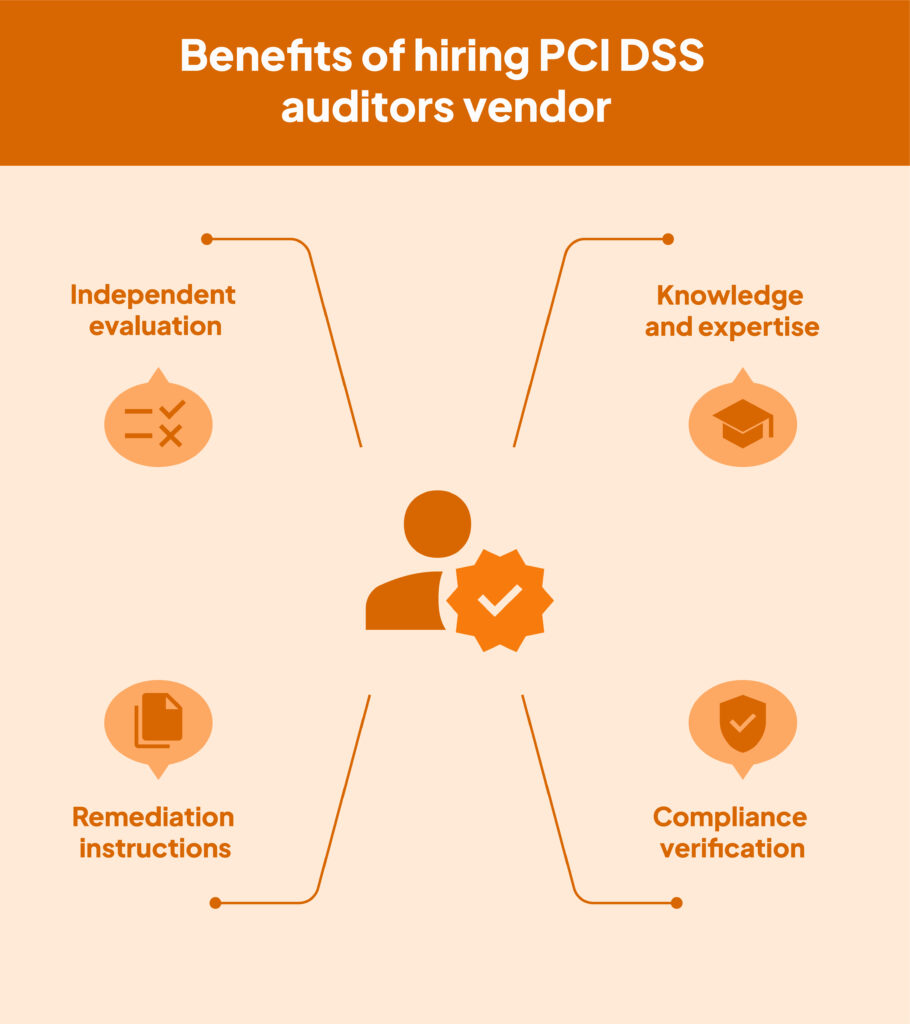
Independent evaluation
A qualified PCI DSS assessor offers an independent evaluation of the security practices and procedures used by an organization. Due to this independence, compliance examinations are always thorough and free of conflicts of interest.
Knowledge and expertise
Qualified Security Assessors (QSAs), in particular, are Qualified Security Assessors with an in-depth understanding of the standards and best practices. They keep up with the most recent standards and business trends, enabling them to offer precise advice and suggestions for achieving compliance.
Also check: PCI DSS Assessment: A Quick Guide
Remediation instructions
Vendors of PCI DSS auditors not only point out areas of non-compliance but also provide advice on how to fix them. They offer guidance and best practices for enhancing security measures, fixing flaws, and making the required adjustments to comply with PCI DSS criteria. This advice can be quite helpful in improving an organization’s security posture.
Assessment and reporting
PCI DSS audit services cover assessment of your environment and issue of the required reports for the applicable scope. The QSA performs evaluations, reviews documentation, runs technical tests, and delivers a Report on Compliance. Where you are eligible to self-assess, a QSA can also review your self-assessment questionnaire (SAQ) before submission. To prove compliance, these reports might be provided to acquiring banks, payment card companies, or other parties.
These benefits depend heavily on who you choose. Not every QSA will be a fit for your environment, timeline, or way of working, so it helps to evaluate them with a few practical criteria in mind.
Download Your PCI DSS SAQ Eligibility Form
How to choose the best PCI DSS auditors?
To choose the right auditor for your PCI DSS program, consider the following tips:
- Look for auditors who have a proven track record of successfully helping organizations meet their auditing goals. They should have extensive experience in this field.
- Ask the QSA firm you are evaluating to give you a demo of how they plan on conducting the audits. The process, technology, and timelines are also important considerations while choosing a firm.
- Cross check with their previous clients and existing customers to understand how well they are meeting their requirements, addressing the gaps, and enabling them to move towards their goals.
- While quality and experience are important metrics to choose a vendor, keep your costs and budget constraints in mind as well. Choose a pricing module that best fits your organization.
- Consider their quality of ongoing and post audit support. Additionally, they should have clear communication and collaboration throughout the auditing process.
Ask how the auditor prefers to review evidence. A good QSA should understand PCI DSS and fit a workflow your team can actually support. Sprinto helps here by giving you a secure auditor-facing workspace for evidence, clarifications, and progress tracking.
How Sprinto streamlines your PCI compliance journey
Picking the right QSA matters. But for most teams, the harder part is reaching the audit with controls, evidence, and remediation history already in order.
Sprinto helps you do that before the auditor ever logs in. It continuously collects and organizes PCI evidence, keeps control status visible, and gives your team a clearer view of what is complete, what is missing, and what needs follow-up.
Once you choose an auditor, you can bring them into Sprinto’s secure workspace to review evidence, request additional context, and track audit progress without bouncing across inboxes, screenshots, and shared folders.
That makes Sprinto useful on both sides of the audit. Your team spends less time reconstructing proof, and your auditor spends less time waiting for it. And because PCI is not a one-time file exchange, the same system helps you keep evidence and controls organized for the next scan, questionnaire, or assessment.
See how Sprinto helps teams stay ready for PCI reviews. Book a demo now.
FAQs
Can businesses evaluate their own PCI DSS compliance?
Some organizations might be qualified to conduct self-assessments utilizing self-assessment questionnaires (SAQs), depending on their transaction volume and particular requirements. However, some compliance levels might need to be evaluated by a qualified outside auditor.
What makes a PCI audit important?
A PCI audit is important because it enables businesses to maintain the security of cardholder data and maintains regulatory compliance. It assists in preventing data breaches, safeguards client confidence, and averts sanctions or fines for noncompliance.
What does a PCI auditor look for during an audit?
During the auditing process, a number of things will be examined, such as the application of security policies and procedures, network security controls, security infrastructure, vulnerability management, access controls, physical access points, encryption practices, and general adherence to the PCI DSS criteria.

Author
Shivam Jha
Shivam is our in house cybersecurity sage with over six years of experience in cybersecurity under his belt. He is passionate about making the digital world safer for everyone and whipping up Indian delicacies on the weekend.Go beyond the surface and uncover the governance, risk, and compliance insights that actually matter.


Win digital goodies for boardroom success



Explore more





research & insights curated to help you earn a seat at the table.