Is Compliance the Growth Lever Early Teams are Missing?



TL;DR
| Early-stage teams increasingly use compliance to unlock markets, accelerate deals, and expand their addressable customer base. |
| Enterprise and mid-market customers expect proof of security and maturity upfront, often refusing to engage without it. |
| For smaller teams, compliance builds credibility and access; for larger SMBs, it reduces friction, shortens sales cycles, and improves efficiency. |
| Compliance strengthens buyer confidence and signals operational maturity to customers and investors; late adopters risk capping their growth. |
According to Sprinto’s Business ROI of Compliance 2026 report, 67% of organizations unlocked newer markets with compliance.
For most early-stage SaaS teams, compliance has traditionally been reactive. You deal with it when a big deal demands it, when procurement asks for a SOC 2 report, or when expansion into a new market makes it unavoidable.
But that mental model is starting to break or has already broken.
Compliance is no longer just about reducing risk. For many early-stage companies, it’s actively shaping who they can sell to, how fast deals move, and how much of the market they can access.
The real reason why compliance is showing up earlier
The shift in compliance mindset isn’t being driven by regulators, but instead by the buyers themselves.
Enterprise and mid-market customers now expect proof of security and operational maturity at the very start of the sales cycle. In many cases, they won’t engage at all without it.
The impact is most visible in enterprise and global sales. Teams that once relied on founder-led selling or personal networks often see those approaches stall as they scale. Without demonstrated trust, deals simply don’t progress. As one founder in the report put it: for enterprise accounts, compliance is no longer optional; it’s the cost of doing business.
The business ROI of compliance
Compliance now directly shapes growth. Certifications determine which markets companies can enter, whether they make buyer shortlists, and how quickly deals convert into revenue.
As highlighted in Sprinto’s Business ROI of Compliance 2026 report, compliance has moved beyond an operational requirement to become a commercial enabler, influencing access, credibility, and revenue efficiency as companies scale.
Compliance as a growth lever: What data reveals
The data from the report shows a clear shift in how growing organizations think about compliance. What was once treated as a one-time requirement is now being approached as an ongoing capability, with measurable implications for market access, sales efficiency, and trust.
Compliance is treated as a continuous investment
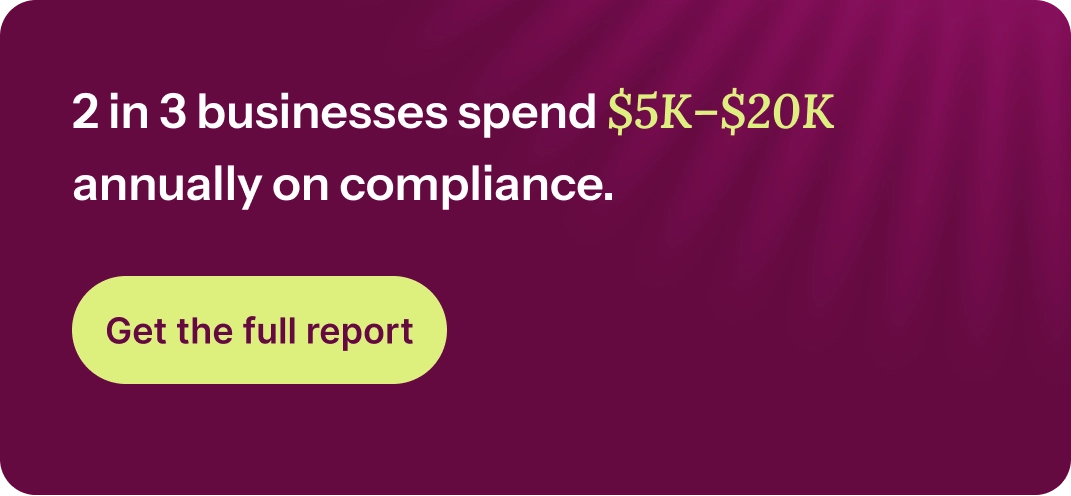
As per the report, compliance is no longer approached as a one-time project completed around an audit or certification. Nearly two-thirds of surveyed organizations report spending between $5,000 and $20,000 annually on compliance.
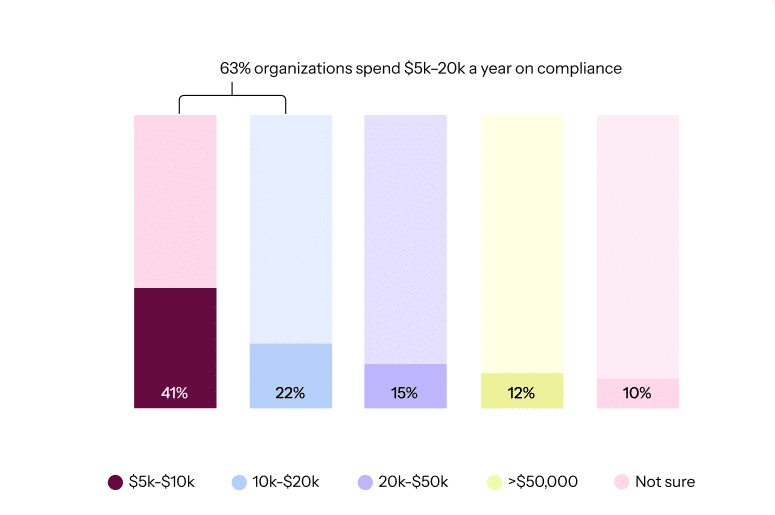
This recurring spend shows that organizations treat compliance as an ongoing investment needed to maintain certifications, meet customer and procurement requirements, and support continued growth, rather than a one-off effort they can complete and move past.
Compliance unlocks market access and expansion
A majority of organizations reported that achieving compliance enabled them to unlock new markets, in some cases driving meaningful expansion in their Total Addressable Market (TAM).
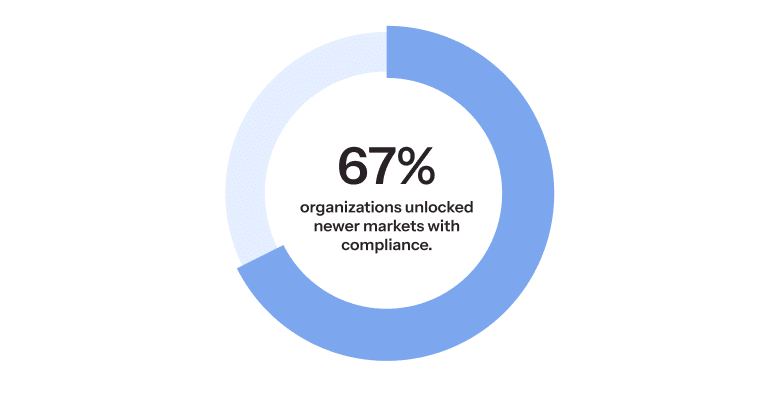
Compliance functions as a gatekeeper—certifications determine whether a company can sell into regulated industries, engage enterprise buyers, or expand across regulated regions. Without this baseline, growth remains capped regardless of product quality or demand.
Compliance delivers different value at different growth stages
As organizations grow, the role compliance plays becomes more visible in different ways. For smaller teams, compliance primarily helps establish credibility. It enables access to larger customers and regulated buyers that require formal security assurances, moving teams beyond founder-led sales and informal trust.
For larger SMBs, the impact shifts toward efficiency. The report shows that these organizations are more likely to experience shorter sales cycles and reduced friction during procurement once baseline compliance is in place. At this stage, compliance supports scale by helping revenue teams move faster and handle higher deal volume without repeated security bottlenecks.
Compliance makes trust a compounding factor
Trust is where compliance begins to compound its returns. Nine out of ten leaders said compliance had a positive impact on customer trust, highlighting its role in shaping buyer confidence.
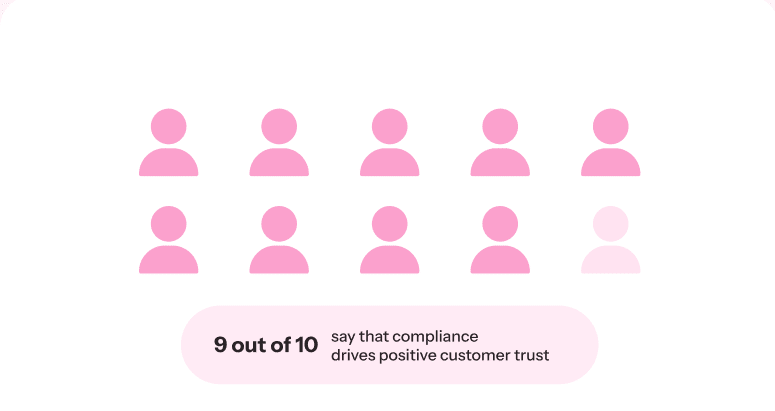
This trust affects how buyers evaluate organizations during procurement, how willing customers are to engage with compliant vendors, and how relationships deepen over time. While compliance does not create demand on its own, it plays a decisive role in which companies buyers feel confident moving forward with, once demand exists.
Taken together, these findings point to a consistent pattern. In revenue conversations, it translates that access into measurable outcomes by reducing friction in sales and procurement. At the same time, it helps build trust alongside structure, as customers increasingly treat compliance as non-negotiable and investors view it as a signal of operational maturity.
What changes after you’re compliant
Teams that treat compliance as an ongoing function (rather than a one-time project) report smoother sales conversations, fewer stalled deals, and faster movement through procurement. As companies scale, compliance starts functioning like operational infrastructure — invisible when it works, painfully obvious when it doesn’t.
This is especially visible in larger early-stage organizations, where the bottleneck isn’t lead flow but velocity. At that stage, compliance doesn’t win deals; it prevents them from slowing down.
Early-stage orgs embrace compliance while late adopters fall behind
Despite these outcomes, many teams still frame compliance defensively, as a cost, as a risk-management exercise, or even as a necessary evil.
But the data tells a different story. Most organizations surveyed in the report say compliance positively impacts customer trust, and a growing number now see it as a signal of maturity to buyers and investors alike.
The disconnect often can be seen in perception. Teams that wait for compliance to be “worth it” often realize too late that they’ve already constrained their growth options.
Looking ahead in 2026
In the next phase of SaaS growth, compliance won’t sit on the sidelines. It will quietly shape go-to-market strategy, deal velocity, and expansion paths.
The question for early-stage teams isn’t whether compliance matters.
It’s whether they’re prepared to treat it as part of how they scale — not something they scramble to fix when growth demands it.
Want the full data on how compliance drives growth?
The insights highlighted here represent only a small portion of the broader patterns uncovered in The Business ROI of Compliance 2026. The full report brings together findings across market access, trust, sales efficiency, and revenue impact to show how compliance readiness shapes growth at different stages.
Author
Pansy
Pansy is an ISC2 Certified in Cybersecurity content marketer with a background in Computer Science engineering. Lately, she has been exploring the world of marketing through the lens of GRC (Governance, risk & compliance) with Sprinto. When she’s not working, she’s either deeply engrossed in political fiction or honing her culinary skills. You may also find her sunbathing on a beach or hiking through a dense forest.Go beyond the surface and uncover the governance, risk, and compliance insights that actually matter.


Win digital goodies for boardroom success


Explore more



research & insights curated to help you earn a seat at the table.