Glossary of Compliance
Compliance Glossary
Our list of curated compliance glossary offers everything you to know about compliance in one place.
HIPAA Privacy Practices
Covered entities must provide a Notice of Privacy Practices (Privacy Notice) to every individual whose PHI is processed by them. Healthcare providers send this notice to new enrollees during initiation and at least once every three years to the existing ones. Self-insured health plans create their own Privacy Notices, while fully insured plans rely on their insurance issuers for this.
How to provide the notice?
- Any person who requests the Privacy Notice should receive it
- The notice must be prominently displayed on the entity’s website if it provides customer service or benefit information there
- Health plans must give the notice to current members by April 14, 2003 (or April 14, 2004, for smaller plans) and to new enrollees during enrollment
- If the notice changes significantly, it should be reissued within 60 days
- Covered Direct Treatment Providers must give the notice to patients at the first service encounter, and efforts should be made to get a written acknowledgment
- For online or electronic service delivery, an electronic notice should be sent upon the patient’s request
- In emergencies, the notice should be provided as soon as possible, and acknowledgment is not required
- The latest notice reflecting any changes should be available for patients to take and be prominently displayed at the provider’s facility
- If a patient agrees, the notice can be sent via email
Additional reading
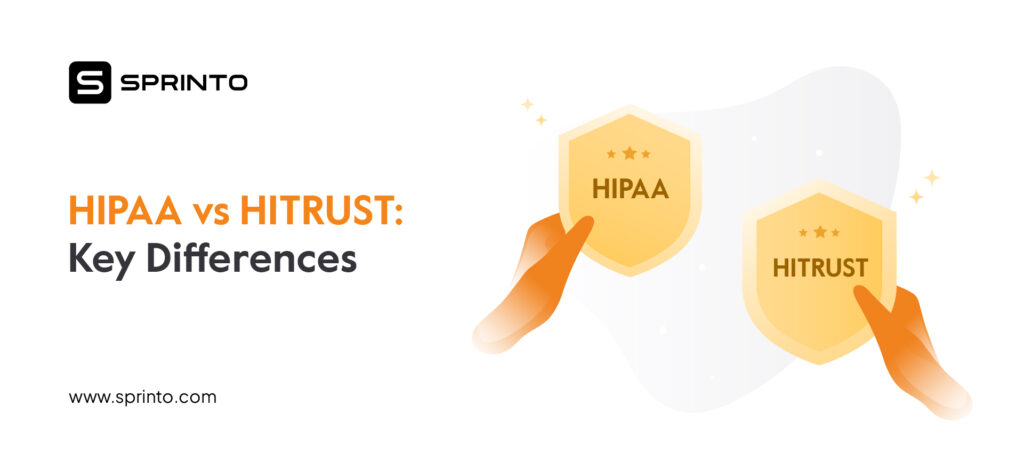
HITRUST vs HIPAA : Compare Differences and Similarities
HIPAA and HITRUST are two standards often used interchangeably in the healthcare industry. Despite having overlapping requirements and the same goal – to secure protected health information (PHI), their applicability differs in many ways. This raises the question: which is right to secure data in the healthcare industry? Which makes more sense for my type…

SIEM use cases: How to bulletproof your business?
TL,DR: SIEM centralizes security data from applications, firewalls, servers, and network proxies for real-time threat detection. Gartner identifies rapid breach detection as the primary driver for SIEM adoption Key use cases include unauthorized access detection, insider threat monitoring, malware identification, compliance reporting, phishing detection, DDoS identification, and anomalous behavior analysis SIEM strategies must incorporate threat…

100+ Ransomware Statistics You Should Know
TL,DR: Ransomware statistics highlight the scale, cost, and operational impact of ransomware attacks. Trends show why businesses need prevention, detection, backup, and response capabilities. Data-backed security planning helps leaders prioritize ransomware defense investments. No matter how much you beef up your defenses, there’s always a bad actor out there eager to find that one overlooked…

Sprinto: Your growth superpower
Use Sprinto to centralize security compliance management – so nothing
gets in the way of your moving up and winning big.