Sprinto vs Vanta vs Oneleet: Which Compliance Automation Platform Should You Choose?
Most teams land on this exact shortlist for the same reason: a deal just stalled because a customer asked for a SOC 2 report you do not have yet, and you need it sorted quickly. Sprinto, Vanta, and Oneleet are all built to solve that, which is why they keep ending up on the same list. Where they split is one question: how much of the work do you want to hand off, and how much do you want to keep? Vanta hands you a clean, well-organized platform and expects your team to drive. Oneleet sits at the opposite end, bundling pentesting, a virtual CISO, and the audit coordination, so you can offload most of the process. Sprinto sits in between, pairing heavy automation with a dedicated compliance expert, and it is the one I would pick if you suspect this first certification is only the start.

TL;DR
Quick Snapshot
|
Features |
Sprinto |
Vanta |
Oneleet |
|---|---|---|---|
|
Best for 🎯 |
✅ Scaling SaaS and mid-market teams managing more than one compliance workflow |
✅ Startups and lean teams that want a familiar, fast path to audit readiness |
✅ Security-conscious startups that want compliance, pentesting, and vCISO support in one bundle |
|
Frameworks |
✅ 200+ |
⚠️ 35+ |
⚠️ SOC 2, ISO 27001, HIPAA, PCI DSS, GDPR, CIS IG1, + 10 more |
|
Integrations |
✅ 300+ |
✅ 375+ |
⚠️ NA |
|
AI capabilities 🤖 |
✅ Agentic onboarding, AI audit review, vendor and risk workflows |
✅ AI across evidence, policies, questionnaires, vendors, and risk |
✅ AI for risk assessments, questionnaires, policies, and evidence |
|
Continuous monitoring |
✅ Yes |
✅ Yes |
✅ Yes |
|
Risk management |
✅ Real-time scoring tied to controls, findings, vendors, and remediation |
⚠️ Capable, but not the strongest reason to buy Vanta |
⚠️ Included, but lighter than Sprinto in public depth |
|
Vendor risk |
✅ Full lifecycle coverage across discovery, scoring, due diligence, questionnaires, monitoring, and offboarding |
⚠️ Good vendor coverage, but some TPRM features sit outside the base plan |
✅ Built in, with reviewers calling out automatic vendor sync and pre-filled assessments |
|
Bundled pentest / vCISO |
⚠️ Available through partners |
✅ Included in the standard package |
|
Audit support |
✅ Continuous readiness, evidence tracking, and structured audit management |
✅ Clean audit workflow and good auditor collaboration |
✅ Bundled audit, with Oneleet handling scheduling and evidence hand-off |
|
Pricing |
⚠️ Custom quote |
⚠️ Custom pricing across tiered plans, with add-ons as scope expands |
⚠️ Custom quote; one framework at a time, billed per framework |
|
G2 rating |
|||
|
Overall fit |
✅ Best for long-term compliance scale and broader trust workflows |
✅ Best for a mainstream, integration-rich compliance setup |
✅ Best for bundled security-first execution |
What is Sprinto
Sprinto is an Autonomous Trust Platform that runs compliance, audits, vendor management, risk, and customer security questionnaires from a single connected system rather than separate tools for each. Evidence refreshes on its own, risks update as your environment changes, and the work that usually spikes right before an audit is spread across the year instead. The result is a program that holds together as you add frameworks and obligations, without bolting on new tools each time.
Key strengths of Sprinto

Integration Agent: A browser-based agent configures complex cloud setups like AWS and GCP for you, instead of handing you a checklist of console steps.

Audit Agent and structured findings: Sprinto’s AI reviews evidence before the auditor does, flags likely questions, and keeps all findings in the audit workspace for the next cycle.

Vendor lifecycle workflows: Coverage runs the full arc, from vendor request and approval through due diligence, questionnaires, scoring, and breach monitoring to offboarding.

Risk intake and approvals: Anyone can log a risk, which moves through a defined review and approval flow with mitigation tied back to controls and live system changes.

Framework scale with reuse: With 200+ frameworks and automatic control mapping, your second and third certifications largely reuse work already done.

Autonomous AI governance: Sprinto brings AI risk registers, lifecycle oversight, vendor due diligence, and policy enforcement into one operating layer for AI governance.

Sprinto makes the most sense when this SOC 2 is the first of several certifications, not a one-off. If vendor reviews, access reviews, risk tracking, and a steady stream of customer security requests are headed to the same team, Sprinto is built to take on more of that load over time, rather than leaving you to add tools later.
What is Vanta
You have almost certainly heard of Vanta before starting this search. It made its name by making SOC 2 approachable for small teams and has since expanded into AI, vendor risk, security questionnaires, and integrated risk management. It turns a sprawling process into a clear, ordered set of tasks, which is why I still see it as the default starting point for a fast certification.
Key strengths of Vanta

The widest integration library here: At 375+ connectors, Vanta covers most common startup stacks out of the box, keeping early setup from turning into manual workarounds.

A mature, low-effort Trust Center: The customer-facing trust page is well-developed and quick to publish, so you can point a prospect to live proof instead of last year’s report.

Continuous monitoring with alerts: Vanta runs ongoing checks across your connected systems and flags drift as it happens, so a control slipping out of compliance surfaces right away instead of at the next audit.

AI tied to everyday tasks: Vanta’s AI handles policy drafting, evidence checks, questionnaires, and parts of risk, mapped to jobs stakeholders already recognize.

Clear audit organization: Timelines, status, evidence, and ownership are centralized and easy to read, which helps when a team runs an audit for the first time.
Reach for Vanta when you want to move fast on a standard certification and value a familiar, low-risk choice that is easy to justify internally. If your scope is mostly SOC 2 and a couple of adjacent frameworks, and you are happy to drive the process yourself, this is your safe default.
What is Oneleet
Oneleet is best understood as a security-first compliance bundle rather than a broad GRC platform. The pitch is straightforward: stop treating compliance like a checklist exercise and pair it with real security work. Oneleet packages compliance automation with pentesting, attack surface monitoring, code security scanning, mobile device management, and dedicated vCISO support, and its reviewers repeatedly note fewer vendors, faster timelines, and the team carrying the work alongside them.
Key strengths of Oneleet

Security-first bundle: Oneleet ships pentesting, CSPM, attack surface monitoring, and SAST/DAST as part of the platform, not as add-ons.

vCISO and hands-on support: A dedicated security program manager is part of the package, which reviewers cite as the reason they felt audit-ready without an in-house hire.

Audit bundled in: The third-party audit is performed by independent AICPA auditors and included in the package, with Oneleet handling scheduling and evidence hand-off.

Practical AI in obvious places: AI is built into questionnaire drafting, risk assessments, policy generation, and evidence review.

Transparent bundle pricing: Reviewers like that they get one price for everything instead of surprise add-ons, though each framework is billed separately and run one at a time.
Oneleet fits best when you want compliance and security handled together, especially if pentesting and vCISO advice are real parts of your decision. And if you would rather have someone else collect the evidence, write the policies, run the pen test, and prep the audit, no other option here does as much of that for you.
Detailed Comparison
Every one of these can hand you a SOC 2 report. The real differences show up underneath: how each platform thinks about the work, how much of it lands back on you, and whether it still fits once you move past the first certification. Here is how they separate across the categories that decide most evaluations.
1. Platform Core Principles
This is where the products start to feel fundamentally different.
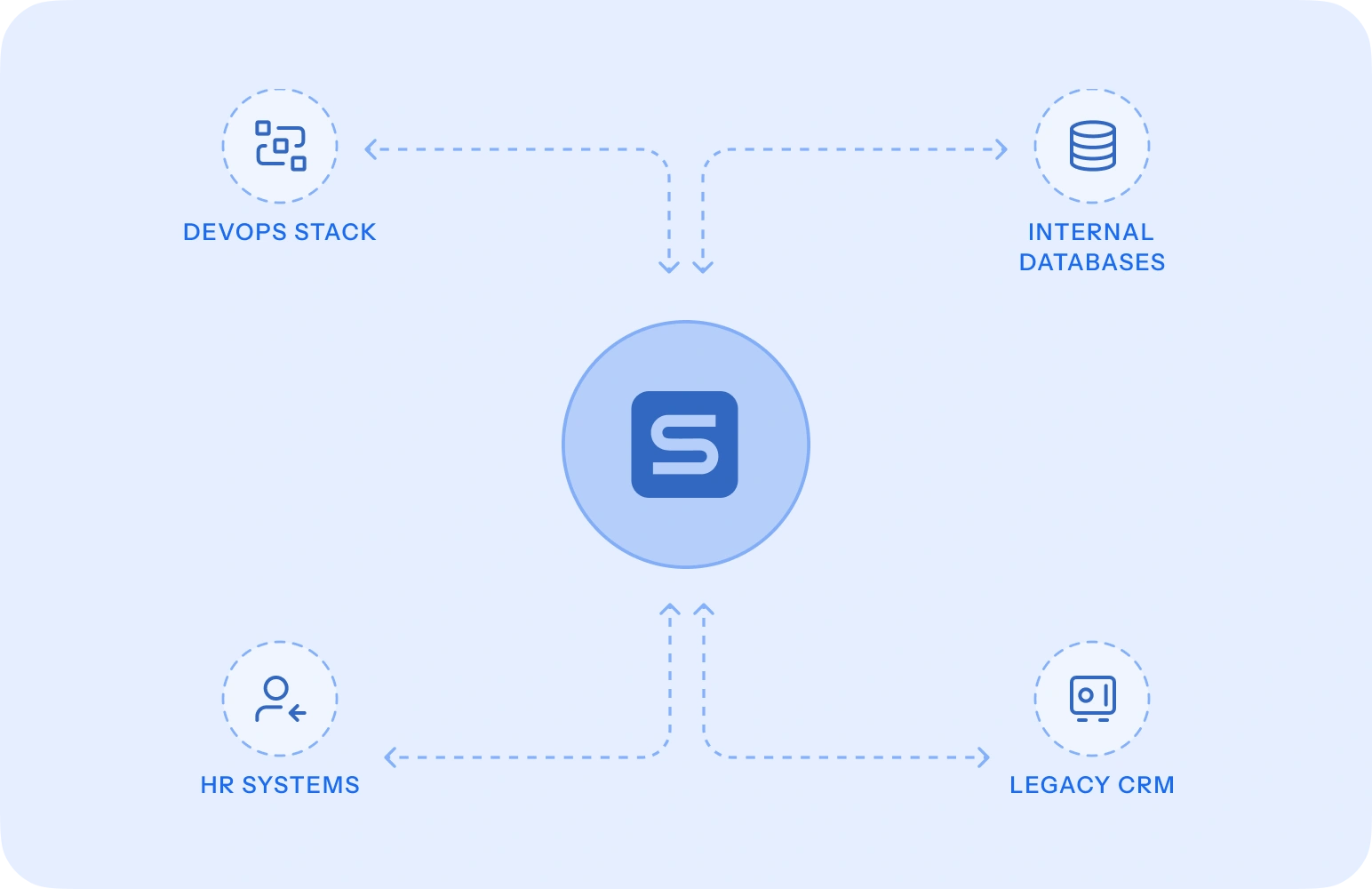
Sprinto treats compliance, audits, vendor due diligence, questionnaires, and risk as one continuous program rather than a series of one-off projects. Controls, evidence, risks, and vendor records all live in the same connected model, so the work does not fragment across tools as you add scope.
Vanta is a compliance-first platform that grew outward. It adds risk, vendor, and AI features, but its core focus remains helping a lean team get organized and certified through clean, standardized workflows. That tight focus is why you can get it running without much ramp-up.
Oneleet approaches the problem from a security perspective, not paperwork. Its founding view, from a team of former penetration testers, is that real security should produce compliance as a byproduct. So it feels less like a GRC dashboard and more like a security service with compliance wrapped around it.

2. Onboarding and ease of use
This is where teams decide very quickly whether the product feels like leverage or overhead.
Sprinto earns its usability marks over the full arc, not just the first login. Reviewers point to structured tasks, steady support, and far less manual evidence chasing once it is running. The one caveat is that the first setup can feel busy before the routine settles, which is common for a platform doing this much.
Vanta is the easiest of the three to grasp on day one, and reviewers consistently say so. The interface is approachable, and the structure makes a daunting process legible. The flip side, raised often enough to flag, is cost, thinner features on lower tiers, and manual work when an integration is missing. Reviewers note that the access review module lacks flexibility, and another noted that integrations break a little too often.
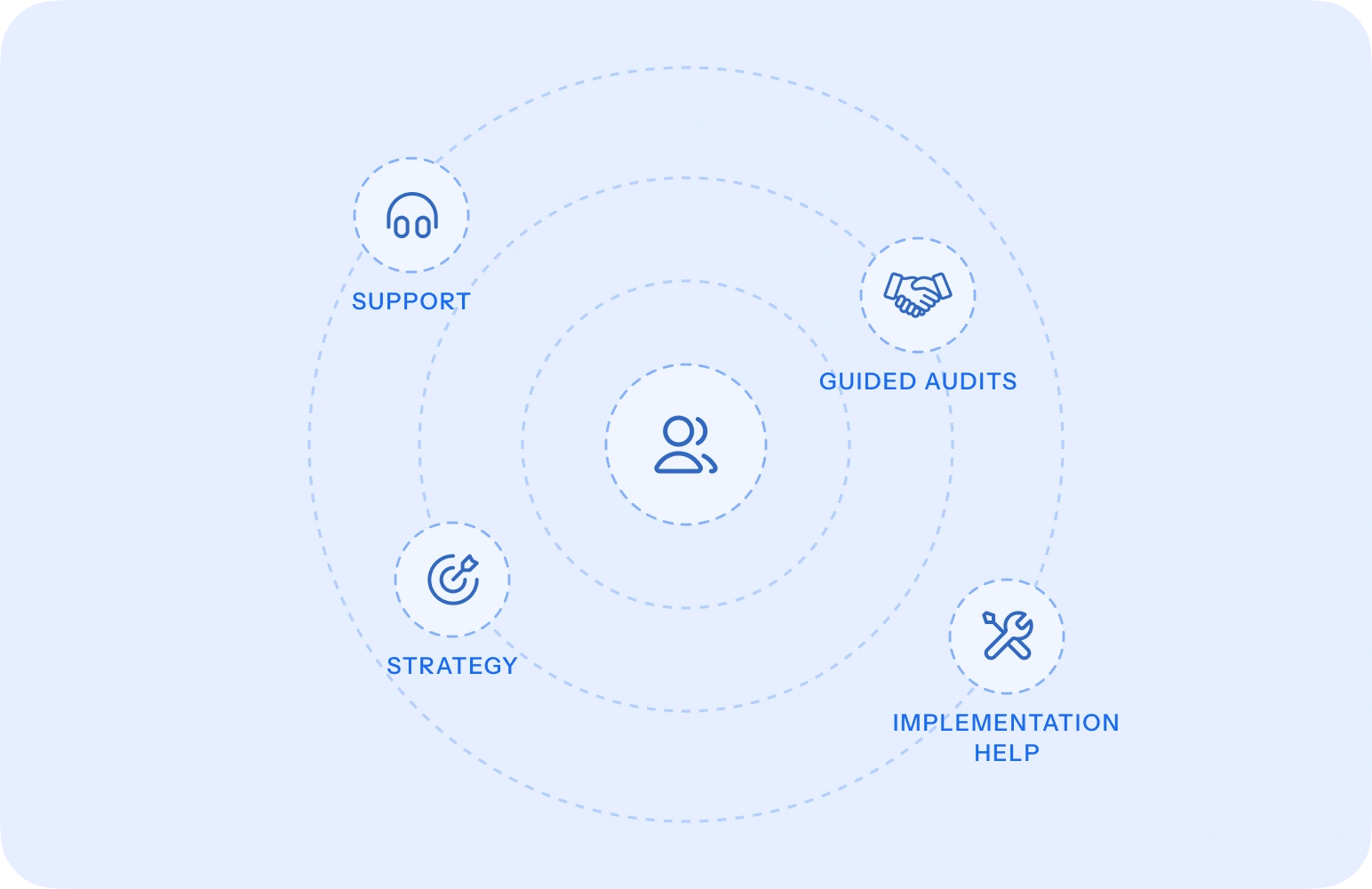
Oneleet feels easy for a different reason: someone else is doing more of the work. Reviewers describe guided onboarding, quick answers over Slack, and a dedicated security program manager who stays on the account.

3. Automation and Evidence Handling
This is still the category’s center of gravity.
Sprinto pushes automation past collection into checking and acting. Beyond gathering evidence, it runs custom automated checks, drafts questionnaire responses, handles vendor due diligence, and reviews evidence before the audit. The intent is to close the loop, not just fill a folder.
Vanta does conventional automation well. It collects evidence, continuously monitors, and supports questionnaires across a large connector library, which is plenty for a widely used stack. Where it strains is deeper customization or tools that fall outside its default coverage, and that is where some manual work creeps back in.
Oneleet ties automation to its service model. Reviewers describe continuous evidence gathering and faster audits, always alongside the Oneleet team, working with them. The pitch is automation plus experts, not software alone. It is also worth noting that reviewers often flag integration issues and limited integration, so the connector coverage is still catching up to that of the bigger players.

4. Risk and Control Management
This is one of the clearest separation points.
In Sprinto, risks connect to live system changes, controls, findings, vendors, and remediation, which keeps the register from going stale between audits. If you want risk wired into daily compliance rather than parked in a spreadsheet, this is the strongest showing here.
Vanta handles risk better than most buyers expect, with customizable scenarios, approvals, and snapshots built into its wider workflow. Even so, if risk is a top priority for you, Vanta looks capable rather than exceptional.
Oneleet includes risk management, but I would not buy it mainly for risk depth. It puts far more weight on bundled security, speed to audit, and hands-on support than on a deep, standalone risk practice. That is a deliberate choice about where to compete, not a gap.

5. Framework coverage and scalability
This matters once your program stops being “just SOC 2.”
Sprinto lists 200+ frameworks and relies on reuse, so a second or third certification largely builds on work already done rather than starting from scratch. If you can see privacy, regional, or AI-governance requirements coming, that runway is the differentiator.
Vanta covers 35+ frameworks, including custom ones, and handles the common paths for SOC 2, ISO 27001, HIPAA, and GDPR without trouble. The ceiling only appears when your roadmap becomes specialized.
Oneleet publishes SOC 2, ISO 27001, HIPAA, PCI DSS, GDPR, CIS IG1, and around ten more. The catch is not the number of frameworks, but the order in which you tackle them, because Oneleet runs one at a time. SOC 2 comes first, then ISO 27001 or HIPAA, one after another rather than together. If you are taking it one certification at a time, that focus actually helps. If you need several at once, it is a real limitation to plan around.

6. Reporting, visibility, and audit readiness
This is where your team really feels the product during audit season.
Sprinto is built for readiness that holds all year, rather than a tidy folder at audit time. Auto-collected evidence, control health, audit management, the trust center, and structured findings all feed each other, so the next cycle opens with prior findings already mapped instead of being rebuilt from memory.
Vanta provides a reliable audit workflow with organized evidence and a clear status. It meets the bar comfortably. The limit is connection, not capability: as the program grows more complex, the experience can feel more self-service and less joined up.
Oneleet focuses on relief over reporting polish. Reviewers repeatedly say Oneleet took the scheduling and evidence back-and-forth off their plate, so the audit ran with far less admin on their side. If you are a small team racing against a deadline, that is worth more to you than another dashboard.

7. AI capabilities
All three vendors now talk about AI. The useful question is what the AI actually helps your team do.
Sprinto has the widest AI reach of the three, spanning always-ready evidence, policy drift detection, vendor due diligence, questionnaire handling, framework mapping, risk intelligence, and newer agents for audit review and integrations. The ambition is to absorb work, not just assist with it.
Vanta keeps its AI close to recognizable tasks: policy drafting, evidence checks, questionnaires, and parts of risk assessment. That makes it the easiest AI story to explain to a skeptical stakeholder, which is a real advantage when you need buy-in fast.
Oneleet points AI at the annoying, concrete tasks, including questionnaire drafting, risk assessments, policy generation, and evidence review. It is deliberately grounded, and given the trust questions raised by AI-only tools, that restraint plays well with this buyer.

Pros & Cons
SPRINTO
Pros
Cons
Vanta
Pros
Cons
Drata
Pros
Cons
Which should you choose?
Choose Sprinto if
Choose Vanta if
Choose Oneleet if
Final verdict
The winner is…FAQs
The Best Choice for Startups Seeking ISO 27001
Here’s a closer look at how Sprinto and Vanta compare across key compliance dimensions.

Fastest Certification Timeline
Smartly helps startups get certified in 15 to 30 days, not months

All-Inclusive Pricing
You pay one fixed price to get certified, not for each service along the way

Perfect for Lean Budgets
Tailored for early-stage startups that need ISO 27001 as a growth accelerator

End-to-End Guidance
Smartly partners directly with auditors and automates 70% of manual prep work